If a parent or grandparent lost vision to cataracts or another eye condition, your risk may be higher than you think. Here is why a specialist eye examination in Chesterfield matters and when to book one.


Watching a parent or grandparent struggle with deteriorating vision is a deeply unsettling experience. For many people, it also raises a personal question: could the same thing happen to me? The honest answer is that family history does increase your risk for several common eye conditions. The reassuring answer is that early specialist assessment makes a significant difference. If eye disease runs in your family, a specialist eye examination in Chesterfield is one of the most proactive steps you can take.
Does Eye Disease Run in Families?
Yes. Several of the most common eye conditions have a hereditary element. Understanding your family history gives you meaningful information about your own risk profile.
Cataracts are the most significant example for many patients. While age is the primary risk factor, genetics play a clear role in how early cataracts develop and how quickly they progress. If a parent developed cataracts in their fifties or early sixties, your own risk of earlier onset is higher than average.
Additionally, conditions like glaucoma and age-related macular degeneration carry known hereditary risk factors. A family history of any of these is a legitimate reason to seek specialist assessment, not just a routine optician visit.
What a Standard Eye Test Misses
A standard optician eye test checks your current visual acuity and prescription. It may include basic screening for certain conditions. However, it does not constitute a full medical eye examination.
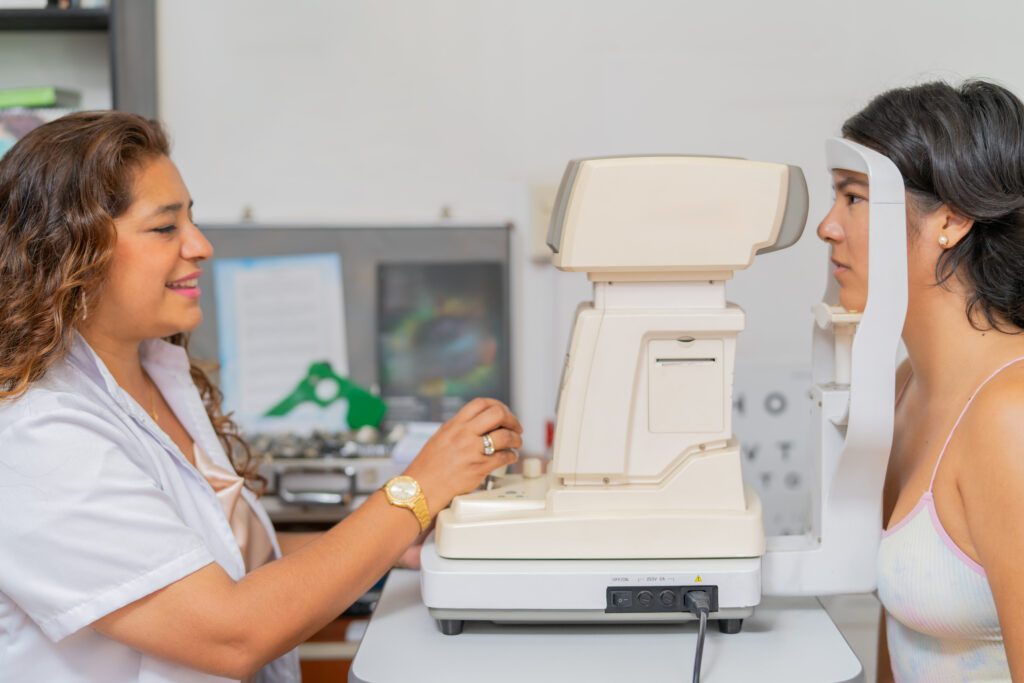
Detecting early-stage cataracts, assessing subtle changes in the lens, or evaluating the health of the optic nerve requires specialist diagnostic equipment and deep clinical expertise. This is what a consultant ophthalmologist provides, and it is a fundamentally different service to what a high-street optician can offer.
If you have a family history of eye disease, a standard eye test in Chesterfield is a starting point. It is not a complete answer.
What a Specialist Eye Examination Looks For
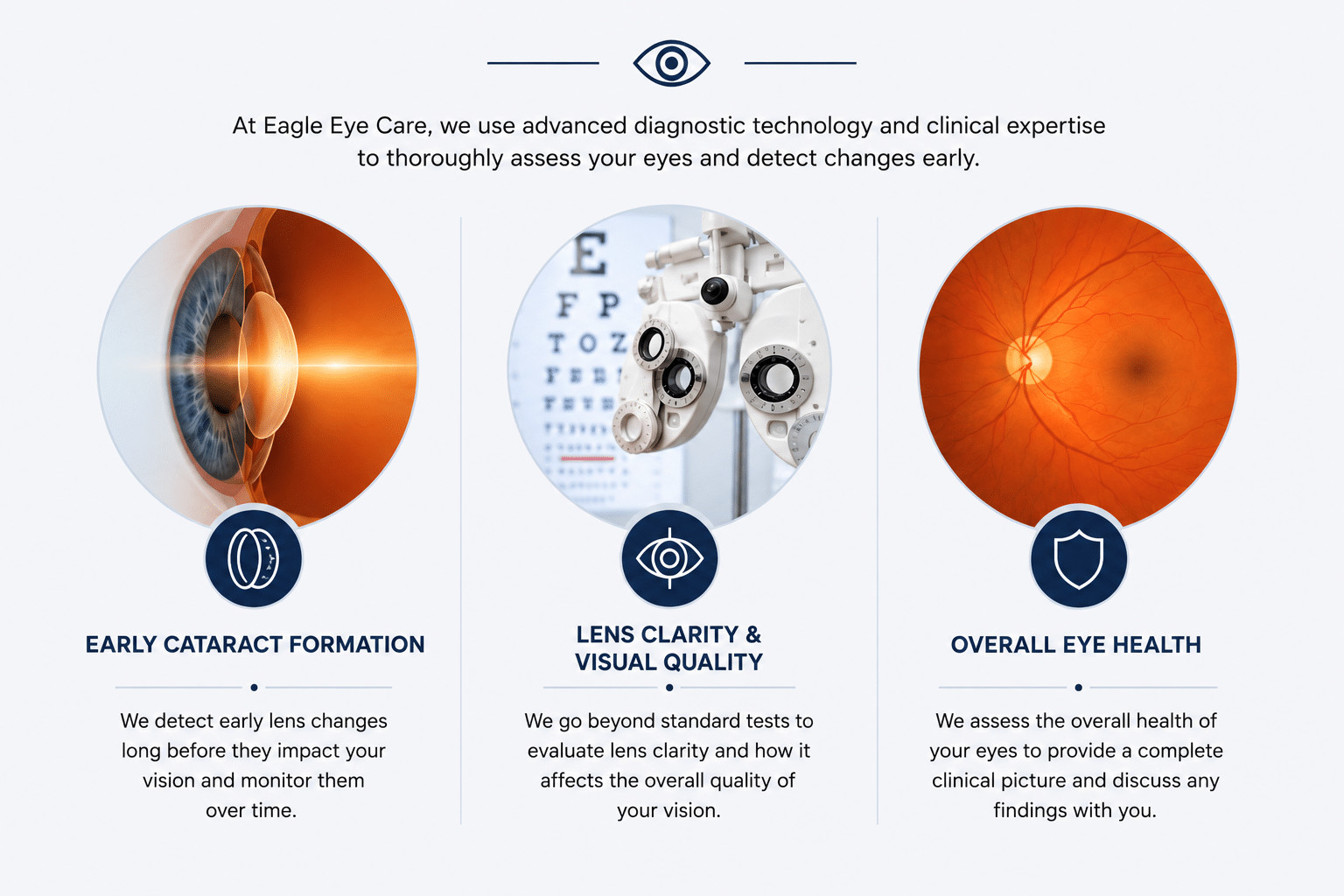
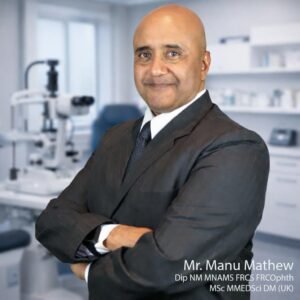
At Eagle Eye Care, Mr Manu Mathew conducts a thorough medical eye examination using advanced diagnostic technology. For patients with a family history of eye conditions, this assessment pays close attention to:
Early Cataract Formation
Cataracts begin developing long before they significantly affect vision. A specialist examination detects early lens changes and monitors them over time. Early detection means you understand your situation clearly and can plan ahead with confidence.
Lens Clarity and Visual Quality
Even if your vision tests reasonably well on a standard chart, subtle lens changes can affect the overall quality of what you see. A specialist assessment evaluates this at a level that goes well beyond a standard refraction test.
Overall Eye Health
Mr Mathew assesses the broader health of your eyes, giving you a thorough clinical picture. If anything warrants closer attention, he discusses it with you directly during your appointment. You can read more about cataract signs and symptoms on our dedicated service page.
At What Age Should You Consider a Specialist Eye Examination?
There is no single answer, but family history brings the recommended age forward. For most people, regular specialist eye health monitoring becomes increasingly important from the mid-forties onward.
If a parent developed cataracts before the age of 65, or if multiple family members have experienced significant vision loss, earlier assessment is sensible. Furthermore, if you already notice any changes in your own vision, including increased glare, subtle blurring, or difficulty in low light, act on those symptoms now rather than waiting.
Why Act Before Symptoms Become Significant?
Many patients who visit Eagle Eye Care for a cataract assessment are surprised at how advanced their condition is before they realised something was wrong. Gradual changes to vision are easy to adapt to and easy to dismiss.
Specialist assessment before symptoms become significant means:
- You understand your baseline eye health clearly from the outset
- Early changes are identified and monitored over time
- You make treatment decisions from a position of knowledge
- You avoid unnecessary vision loss that comes with delayed action
No Referral Needed and No Long Wait
One of the most practical advantages of choosing Eagle Eye Care is direct access to a consultant ophthalmologist. You do not need a GP referral. You do not join an NHS waiting list.
Most patients see Mr Manu Mathew within weeks of making contact. Your examination gives you a clear expert assessment of your eye health and a direct conversation about what the findings mean for you. Book your free initial consultation online or by phone today.
Take the Proactive Step Now
If eye disease runs in your family, waiting for symptoms to become obvious is not the most sensible approach. A specialist eye examination in Chesterfield gives you the clinical clarity that a standard optician visit simply cannot. Early assessment, expert diagnosis, and direct access to a consultant ophthalmologist: these are the things that protect your vision long-term.
Book your specialist eye examination at Eagle Eye Care in Chesterfield today.
If you have noticed any changes in your vision, the first step is a thorough eye examination. At Eagle Eye Care, our private eye test in Chesterfield is led personally by Mr Manu Mathew, consultant ophthalmologist. Book your consultation today.
Frequently Asked Questions
Does family history increase my risk of developing cataracts?
Yes. While age is the main risk factor for cataracts, genetics play a meaningful role. If a parent or close family member developed cataracts at a relatively young age, your own risk of earlier onset is higher. A specialist assessment helps you understand your personal risk clearly.
What eye conditions have a hereditary element?
Cataracts, glaucoma, and age-related macular degeneration all have known hereditary risk factors. If any of these conditions appear in your close family history, proactive specialist assessment is worth considering.
Is a standard eye test enough if I have a family history of eye disease?
A standard optician eye test is a useful starting point, but it does not provide the depth of medical assessment that a consultant ophthalmologist can offer. For patients with a family history of eye conditions, a specialist examination gives a much more complete clinical picture.
At what age should I consider a specialist eye examination if eye disease runs in my family?
For most people, specialist eye health monitoring becomes important from the mid-forties. However, if a parent developed cataracts before the age of 65, or if multiple family members have experienced significant vision loss, earlier assessment makes sense. Mr Manu Mathew can advise you at your initial consultation.
Do I need a GP referral to book a specialist eye examination at Eagle Eye Care in Chesterfield?
No. You can book a consultation at Eagle Eye Care directly, without needing a GP referral. This means faster access to a specialist assessment and no waiting for a referral appointment to come through.
Can Eagle Eye Care detect early cataracts before they significantly affect my vision?
Yes. Mr Manu Mathew uses advanced diagnostic equipment to identify early lens changes, even before they cause significant visual symptoms. Early detection means you can monitor your eye health and plan ahead with confidence.