

Please share a few details and our team will be in touch to arrange your consultation or call you back at a convenient time.
Cataract surgery ranks among the most effective and life-enhancing procedures available today. At Eagle Eye Care, our consultants lead every stage of your cataract treatment, using advanced diagnostic tools, precision surgical techniques, and personalised aftercare. Whether you are struggling with blurry vision, glare, or loss of clarity, we focus on restoring your sight and improving your quality of life.

Thinking about treatment? Download your free information pack today.
Review the treatment process & acknowledge informed consent forms.
Fill out the insurance information form before your appointment.
Prepare for your appointment with our pre-appointment checklist.
Know the key steps for a smooth recovery after Cataract Surgery.
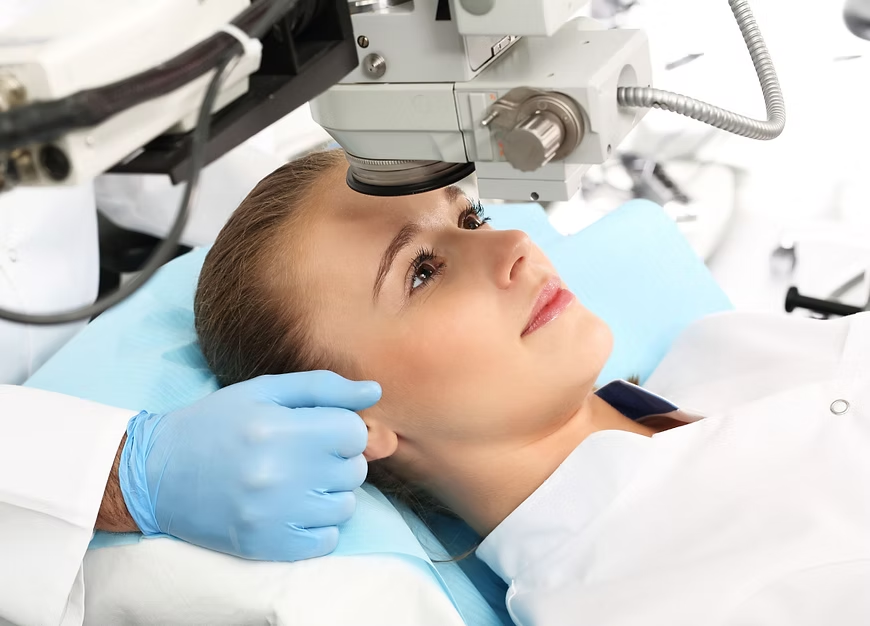
Before surgery, we carry out detailed measurements so that the surgeon can select the right lens type and strength for optimal vision. The lens can be chosen to focus your eye at the distance you prefer, and most people choose to have the sharpest focus in the distance.
Based on your overall eye health, lifestyle, and the measurements gathered at the pre-operative examination, the surgeon will recommend an intraocular lens (IOL). There are two main categories to consider:
Monofocal IOL: These lenses provide clear vision at a single fixed distance, typically for seeing far away. As a result, reading glasses are still needed for close-up tasks such as reading or using a computer.
Multifocal IOL: These lenses improve clarity at both distance and near ranges. Because of this, most patients can function without glasses for distance and the majority of near tasks. In fact, many patients choose multifocal implants for this reason.
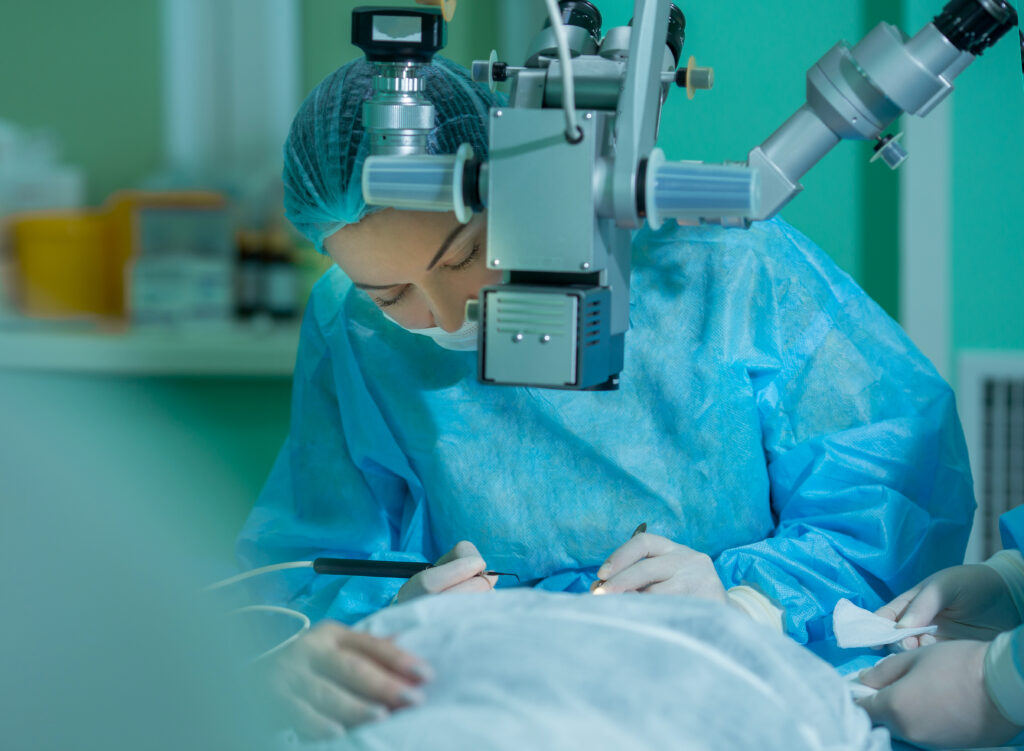
Cataract surgery takes place under Monitored Anaesthesia Care (MAC), which keeps you sedated and relaxed throughout the procedure. Once adequate sedation is achieved, the team cleans and prepares the area around the eye for surgery.
The surgeon then uses a small device to gently hold the eye open while making two small incisions in the cornea. One of these incisions creates a circular opening in the front membrane of the lens, known as the capsule. The team then injects fluid into the capsule to separate the lens from the surrounding membrane.
Next, the surgeon uses phacoemulsification to remove the cataract. This device generates ultrasonic waves that cause rapid vibrations, breaking apart the affected lens. Once the surgeon removes the clouded lens, they place a permanent artificial IOL inside the capsule. Finally, the surgeon closes the incision, usually without stitches, and the procedure is complete.
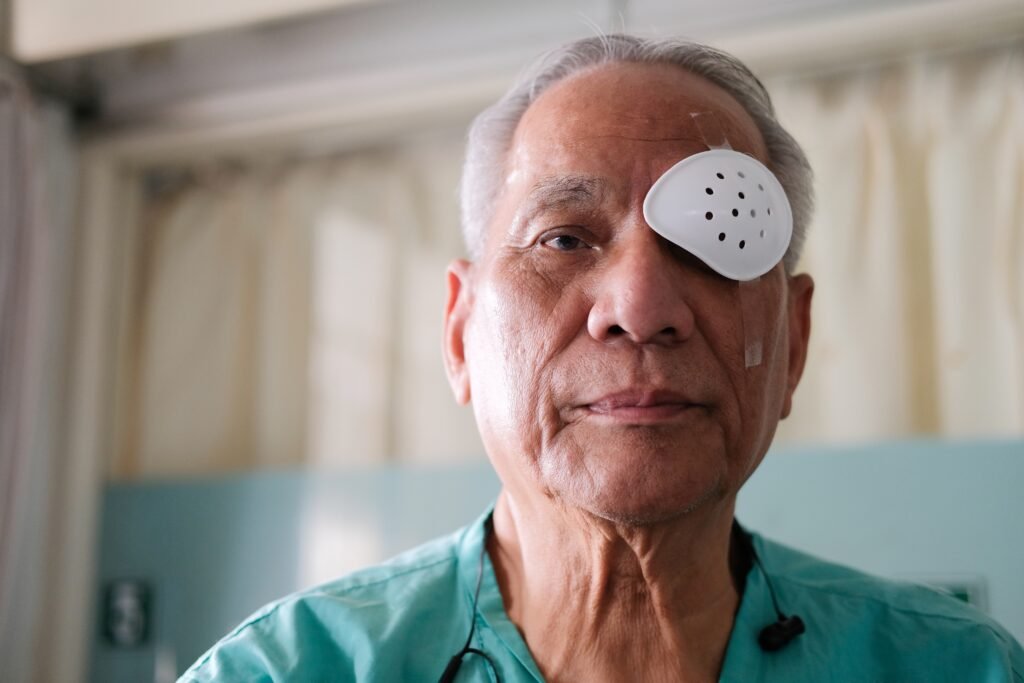
Although cataract surgery has been refined over many years and is extremely safe, there are some risks you should be aware of. To minimise these risks, our surgeon carries out an in-depth examination and medical history review to verify that you have no underlying health issues that could lead to complications.
A small percentage of patients report complications such as ocular hypertension and inflammation. In some cases, swelling at the back of the eye can occur; however, this is rare and, importantly, treatable.
Fortunately, most people do not experience any of these problems. In most cases, full recovery takes four to six weeks, and your vision will usually be completely restored by the day after surgery.
Not sure yet whether cataracts are affecting your vision? A private eye test in Chesterfield with Mr Manu Mathew is the ideal first step before considering any treatment.
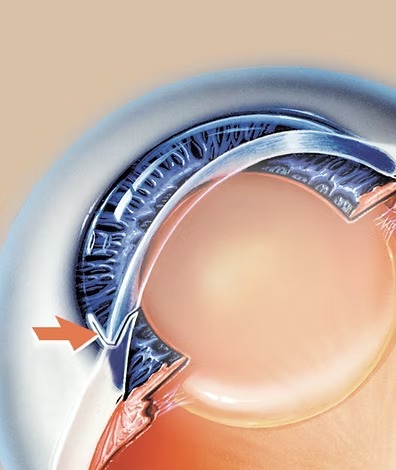
A tiny incision about 3mm wide is made at the corneal margin.
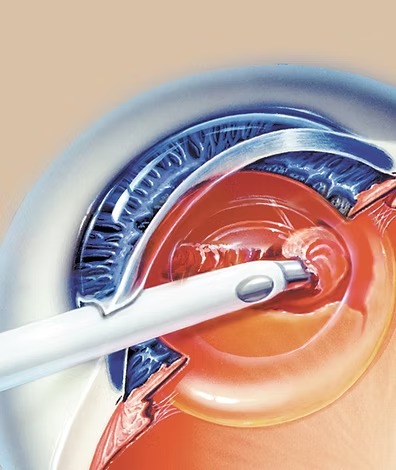
Phacoemulsification probe is inserted through a corneal incision, and ultrasound breaks the cloudy lens into minute fragments which is then removed using the probe tip.
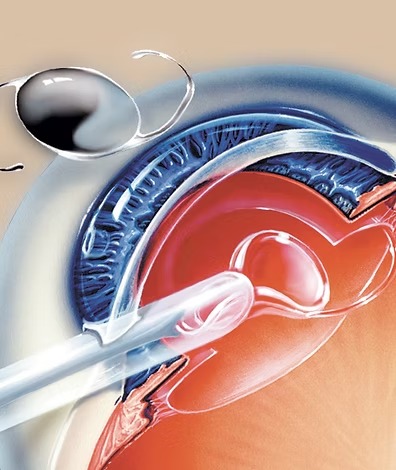
A new, clear intraocular lens (IOL) is inserted in the lens capsule. The chosen IOL is usually folded to fit through the small incision and then unfolded into position.
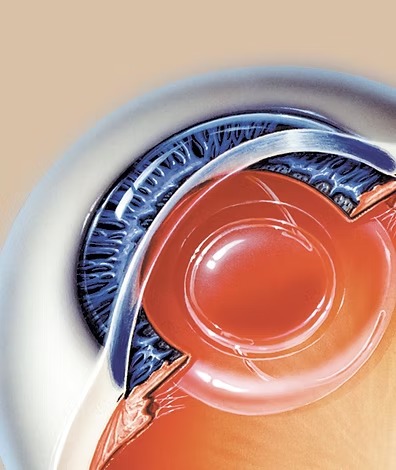
The new intraocular lens is suitably positioned. Small incisions heal naturally without the use of sutures, and vision is restored.
A cataract is a progressive, painless clouding of the natural lens inside the eye, positioned below the iris and pupil. In a healthy eye, light passes through the clear lens to the retina, where the eye converts it into nerve signals and transmits them to the brain. As a cataract develops, however, the image sent from the retina to the brain becomes increasingly cloudy, and vision is gradually affected. Over time, the cataract will reduce the clarity and quality of your vision.
Fortunately, once a cataract is diagnosed, treatment is straightforward. Cataract removal is a quick and painless procedure that we can complete in a single day, and it is the only effective treatment available.
Cataracts are a multifactorial condition, primarily associated with ageing, but also linked to genetic, medical, lifestyle, and environmental factors. In fact, cataracts are so prevalent in people over the age of 60 that they are often considered a normal part of the ageing process.
Several medical conditions and lifestyle factors can contribute to cataract development. For example, diabetes and eye damage are among the most common disorders associated with cataracts. Additionally, people who use corticosteroids long-term are at increased risk. In some cases, cataracts can also be inherited. Although rare, congenital cataracts can occur in infants, and these are typically caused by genetic factors or pregnancy-related illnesses such as rubella.
Common symptoms include:
Preventive measures for cataracts include:
Please update your information to book a consultation or arrange a call back. Providing complete details will help us assist you better.