
Glaucoma is one of the leading causes of preventable sight loss worldwide. However, one of the most concerning aspects of the condition is that it can develop gradually, often without any obvious warning signs. By the time glaucoma symptoms become noticeable, some permanent damage may already have occurred. Understanding glaucoma symptoms is an important part of looking after your long-term eye health. Although not everyone experiences noticeable changes in the early stages, recognising potential warning signs and attending regular eye examinations can help identify the condition before significant sight loss develops. At Eagle Eye Care in Chesterfield, we believe patients should have access to clear, reliable information about their eye health. This guide explains what glaucoma is, the signs to look out for, how the condition is diagnosed and why early assessment matters. What Is Glaucoma? Glaucoma describes a group of eye conditions that damage the optic nerve, which carries visual information from the eye to the brain. This damage is often associated with increased pressure inside the eye, although glaucoma can also develop when eye pressure is within the normal range. The optic nerve plays an essential role in sight. Once nerve fibres are damaged, the resulting vision loss cannot be reversed. However, appropriate treatment can often slow or prevent further deterioration. There are several types of glaucoma, with primary open-angle glaucoma being one of the most common. This usually develops slowly over many years, making it particularly difficult to recognise without an eye examination. Other forms can progress differently, sometimes …
Glaucoma Symptoms: Why Early Detection Matters

Glaucoma is one of the leading causes of preventable sight loss worldwide. However, one of the most concerning aspects of the condition is that it can develop gradually, often without any obvious warning signs. By the time glaucoma symptoms become noticeable, some permanent damage may already have occurred.
Understanding glaucoma symptoms is an important part of looking after your long-term eye health. Although not everyone experiences noticeable changes in the early stages, recognising potential warning signs and attending regular eye examinations can help identify the condition before significant sight loss develops.
At Eagle Eye Care in Chesterfield, we believe patients should have access to clear, reliable information about their eye health. This guide explains what glaucoma is, the signs to look out for, how the condition is diagnosed and why early assessment matters.
What Is Glaucoma?
Glaucoma describes a group of eye conditions that damage the optic nerve, which carries visual information from the eye to the brain. This damage is often associated with increased pressure inside the eye, although glaucoma can also develop when eye pressure is within the normal range.
The optic nerve plays an essential role in sight. Once nerve fibres are damaged, the resulting vision loss cannot be reversed. However, appropriate treatment can often slow or prevent further deterioration.
There are several types of glaucoma, with primary open-angle glaucoma being one of the most common. This usually develops slowly over many years, making it particularly difficult to recognise without an eye examination.
Other forms can progress differently, sometimes producing sudden and severe symptoms that require emergency treatment.
Why Glaucoma Symptoms May Not Be Obvious
One of the biggest challenges with glaucoma is that it can affect vision without immediately changing how clearly you see.
In the early stages, many people experience no noticeable discomfort or deterioration in their central vision. Instead, damage may begin to affect peripheral vision, meaning the edges of the visual field.
Because these changes can be gradual, people often adapt without realising anything is wrong. You might continue reading, watching television and carrying out everyday activities as normal, even while the condition progresses.
This is why relying on how your eyes feel is not enough to establish whether they are healthy.
Early glaucoma symptoms can be difficult to identify independently, and some people will not notice any changes until the condition has advanced. Regular eye examinations remain one of the most effective ways to detect potential problems before they significantly affect everyday life.
What Are the Most Common Glaucoma Symptoms?
The signs associated with glaucoma depend on the type of condition and how far it has progressed. Understanding the possible changes can help you recognise when professional assessment may be needed.
1. Gradual Loss of Peripheral Vision
One of the characteristic signs of developing open-angle glaucoma is a gradual reduction in peripheral vision.
Peripheral vision allows you to see objects and movement outside your direct line of sight. It helps you navigate unfamiliar surroundings, notice people approaching from the side and maintain awareness of your environment.
As the condition progresses, areas of your peripheral vision may become less clear or disappear altogether. In advanced cases, this can create the impression of looking through a tunnel.
These changes may initially go unnoticed because central vision can remain relatively unaffected. You might not realise that your visual field has narrowed until the damage becomes more extensive.
2. Difficulty Navigating Familiar Surroundings
Changes to peripheral vision can affect everyday activities in subtle ways.
Some people find themselves bumping into objects, missing things positioned to the side or struggling to judge their surroundings accurately. Others may become less confident when walking through crowded spaces or navigating stairs.
These difficulties can have several causes, and they do not automatically indicate glaucoma. However, unexplained changes in your ability to see and navigate your surroundings deserve appropriate assessment.
3. Changes to Overall Vision
As glaucoma progresses, it can affect more than peripheral vision. Advanced disease may also impair central vision, making reading, recognising faces and completing detailed tasks increasingly difficult.
However, glaucoma symptoms are not always accompanied by obvious blurring in the early stages. Someone may still feel that their eyesight is perfectly adequate while damage continues to develop.
This is one reason why routine examinations are important even when your vision seems unchanged.
4. Eye Pain, Redness and Blurred Vision
Not every type of glaucoma develops gradually. Acute angle-closure glaucoma occurs when the drainage pathway inside the eye becomes blocked, causing eye pressure to rise rapidly.
Unlike the more common open-angle form, this can produce sudden, severe symptoms, including:
- Intense eye pain.
- A red eye.
- Blurred vision or a sudden reduction in sight.
- Rainbow-coloured rings or halos around lights.
- A severe headache.
- Nausea or vomiting.
These symptoms require immediate medical attention. Acute angle-closure glaucoma is an eye emergency, and delaying treatment can lead to permanent sight loss.
If you experience these symptoms suddenly, seek emergency medical care immediately rather than waiting for a routine eye appointment.
Who Is Most at Risk of Developing Glaucoma?
Glaucoma can affect adults of different ages, although the risk generally increases as you get older. Certain medical and family factors can also make the condition more likely.
You may have an increased risk if you:
- Are aged 50 or over.
- Have a parent, brother or sister with glaucoma.
- Have certain ethnic backgrounds associated with a higher risk of particular forms of glaucoma.
- Have significant short-sightedness or long-sightedness.
- Have previously been identified as having raised eye pressure.
- Have certain medical conditions or a history of eye injury.
Having one or more risk factors does not mean you will necessarily develop glaucoma. Equally, people without recognised risk factors can still be affected.
If glaucoma runs in your family, it is worth discussing your individual risk with an eye care professional. They can advise whether you would benefit from more frequent examinations or additional investigations.
You can find further information about risk factors and the condition through Glaucoma UK, a charity providing information and support for people affected by glaucoma.
How Are Glaucoma Symptoms Diagnosed?
Because glaucoma can develop without noticeable changes to your vision, diagnosis relies on a clinical assessment rather than symptoms alone.
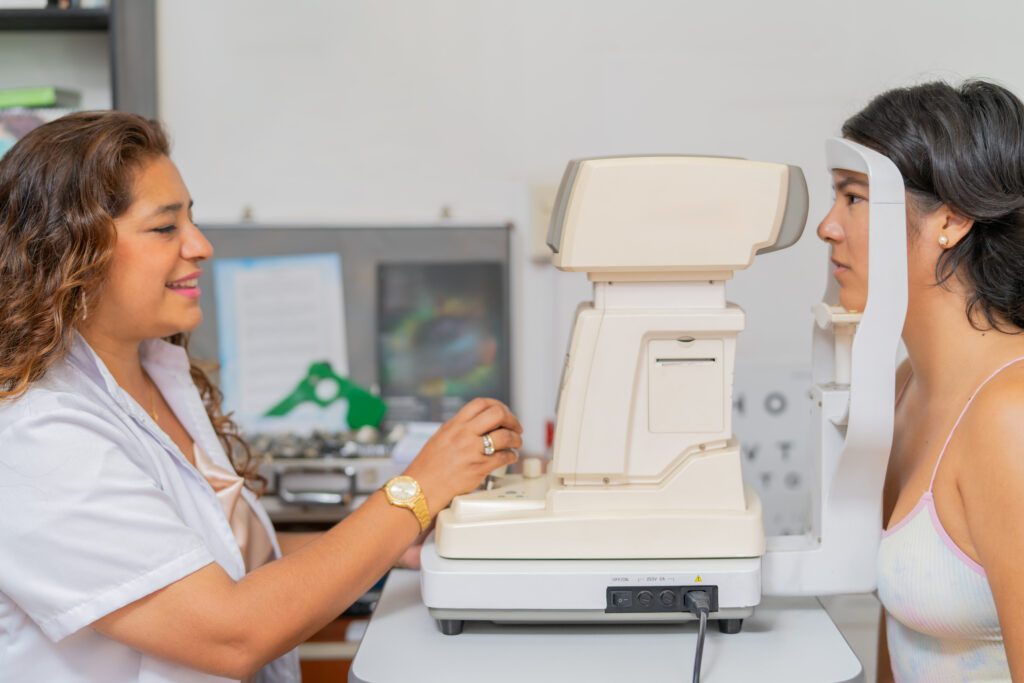
An eye examination may include several tests to evaluate different aspects of your eye health.
Eye Pressure Measurement
Tonometry measures the pressure inside your eyes. Raised intraocular pressure is an important risk factor for glaucoma, although normal pressure readings do not rule out the condition.
Your eye care professional will consider pressure measurements alongside other examination findings rather than relying on this result alone.
Optic Nerve Examination
The optic nerve is examined for structural changes that could indicate damage. Depending on your assessment, your clinician may use specialised imaging to obtain a more detailed view of the nerve and surrounding tissues.
Optical coherence tomography (OCT), for example, produces detailed cross-sectional images that can help identify changes in the nerve fibre layer.
Visual Field Testing
A visual field test assesses how well you can see objects at different points around your central line of sight.
You will generally be asked to respond when you detect lights appearing at different positions. The results help identify areas where your vision may have been affected, including changes you might not have noticed during everyday activities.
Additional Investigations
Further tests may be recommended to examine the drainage angle inside the eye, assess the thickness of the cornea or establish a baseline for future monitoring.
No single test provides a complete picture in every case. A diagnosis is made by considering the results together with your medical history, risk factors and clinical examination.
The National Institute for Health and Care Excellence (NICE) guidance on glaucoma provides detailed information about recommended diagnostic assessments and ongoing management.
Can Glaucoma Be Treated?
Although damage caused by glaucoma cannot be reversed, treatment can help slow or prevent further deterioration. The most appropriate approach depends on the type of glaucoma, its severity and your individual circumstances.
Treatment options may include:
Eye drops: These are commonly prescribed to reduce pressure inside the eye, either by reducing fluid production or improving drainage. They need to be used as directed, even when you are not experiencing noticeable changes to your vision.
Laser treatment: Certain laser procedures can improve fluid drainage or help control eye pressure. Their suitability depends on the type of glaucoma and your clinical assessment.
Surgery: When other treatments are insufficient or the condition requires a different approach, surgery may be recommended to improve fluid drainage and control pressure.
Treatment is only one part of managing the condition. Regular follow-up appointments are essential to monitor changes, assess whether treatment is working and make adjustments where necessary.
Although glaucoma symptoms may become more noticeable as the condition advances, treatment should not be delayed until this happens. Early diagnosis provides a better opportunity to protect the vision you have.
Why Regular Eye Examinations Matter
A routine eye examination can identify potential problems before you notice any changes yourself. This is particularly important for glaucoma, where early damage may not affect central vision or cause discomfort.
The appropriate frequency of examinations depends on your age, family history, previous results and individual risk factors. Some people may need more frequent monitoring than others.
If you have noticed a change in your vision, have a family history of glaucoma or have previously been advised that your eye pressure is raised, speak to an eye care professional about the right next steps.
At Eagle Eye Care, our consultant-led eye examinations in Chesterfield provide an opportunity to assess your eye health, investigate concerns and discuss appropriate recommendations. Where further assessment is needed, your clinician can explain the options available.
It is important to remember that an examination cannot guarantee that glaucoma will never develop. Regular monitoring, however, can help identify changes and support timely management.
Frequently Asked Questions About Glaucoma Symptoms
Can you have glaucoma without knowing it?
Yes. Open-angle glaucoma often develops gradually without noticeable symptoms during its early stages. This is why regular eye examinations are important, particularly if you have risk factors such as a family history of the condition.
Does glaucoma always cause eye pain?
No. The most common forms of glaucoma generally do not cause pain in their early stages. Sudden, severe eye pain accompanied by redness, blurred vision, halos or nausea may indicate acute angle-closure glaucoma and requires emergency medical attention.
Can glaucoma cause blindness?
Glaucoma can cause permanent sight loss if it progresses without adequate treatment. However, early diagnosis and appropriate management can often slow or prevent further damage. The outlook varies according to the type of glaucoma, the extent of existing damage and how well the condition responds to treatment.
How often should I have my eyes examined?
Many adults should have an eye examination at least every two years, although the appropriate interval varies. People at increased risk of glaucoma or those already receiving treatment may need more frequent assessments. Your eye care professional can recommend a suitable schedule.
Take a Proactive Approach to Your Eye Health
Glaucoma can be difficult to recognise because it often develops without obvious warning signs. By the time changes become noticeable, some damage may already be permanent.
Understanding glaucoma symptoms is useful, but recognising that the condition can be present without them is equally important. Regular examinations, awareness of your personal risk factors and timely assessment of any changes to your vision all play a role in protecting your long-term sight.
If you have concerns about your eye health or would like a more detailed assessment, Eagle Eye Care can help you understand the options available. Our consultant-led eye examinations in Chesterfield are designed to provide clear explanations, personalised advice and appropriate next steps.
Contact Eagle Eye Care to arrange an eye examination and discuss your concerns with an experienced eye care professional.