
Cloudy or blurry vision after cataract surgery is often caused by posterior capsule opacification (PCO). Mr Manu Mathew explains what PCO is, how to recognise it, and how YAG laser treatment at Eagle Eye Care can restore your vision.

April 7, 2026
What Is Posterior Capsule Opacification? Symptoms, Treatment and What to Expect from YAG Laser in Chesterfield

You had cataract surgery and your vision improved. Then, some months later, things started going blurry again. Lights seem to glare more than they used to. Reading feels harder. You may have started to wonder whether the cataract has come back.
In most cases, it has not. What you are likely experiencing is posterior capsule opacification, or PCO. It is one of the most common complications that can develop after cataract surgery, and it is entirely treatable with a quick, painless laser procedure.
Mr Manu Mathew and the team at Eagle Eye Care offer YAG laser treatment in Chesterfield for patients experiencing PCO. This guide explains what PCO is, how to recognise it, and what to expect from treatment.
What Is Posterior Capsule Opacification?
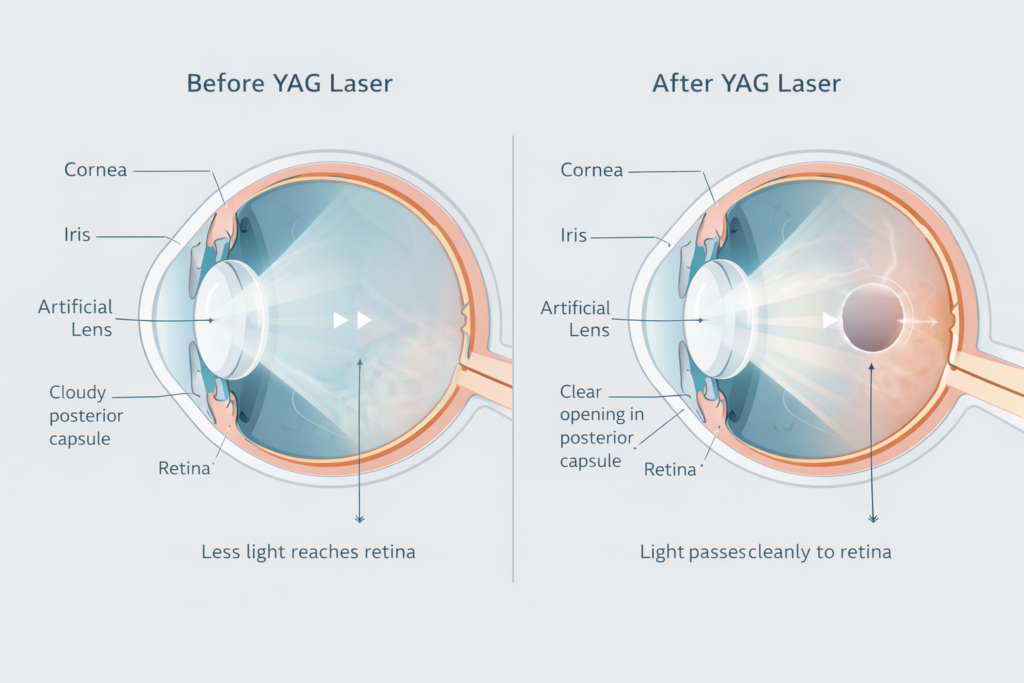
During cataract surgery, the cloudy natural lens inside your eye is removed and replaced with a clear artificial lens, called an intraocular lens. To hold this lens in place, the surgeon keeps the back portion of the original lens capsule intact.
Over time, cells from the edge of the capsule can migrate across this membrane and begin to multiply. As they do, the capsule gradually becomes cloudy. This is posterior capsule opacification.
The term ‘secondary cataract’ is sometimes used, though this is a little misleading. The artificial lens itself has not clouded over. The membrane behind it has. The distinction matters because the treatment is completely different from cataract surgery.
How Common Is PCO?
PCO is the most common long-term complication of cataract surgery. Research suggests it affects a significant proportion of patients within the first few years after their procedure, with some estimates placing the figure between 20 and 40 per cent. The likelihood varies depending on factors including the type of intraocular lens used, the patient’s age, and individual healing patterns.
Younger patients tend to have a higher risk, as their cells are more active and likely to proliferate. That said, PCO can develop at any age following cataract surgery.
Recognising the Symptoms of PCO
The symptoms of PCO develop gradually and can be easy to overlook at first. They often mirror those of the original cataract, which is why some patients assume their cataract has returned. Common signs include:
- Blurred or hazy vision that worsens over time
- Increased glare, particularly around lights at night
- Halos around bright light sources
- Difficulty reading, watching television, or using a screen
- Colours appearing less vivid or washed out
- A general sense that your vision is not as sharp as it was just after surgery
If you have had cataract surgery and are noticing any of these changes, it is worth speaking to a specialist. PCO does not resolve on its own, and vision will continue to worsen without treatment.
Is PCO the Same as a Cataract Returning?
No. Once a cataract has been removed, it cannot grow back. The artificial lens placed during surgery will remain clear. PCO is a separate condition affecting the lens capsule, not the lens itself.
The confusion is understandable because the symptoms are similar. However, the cause and the treatment are entirely different. Cataract surgery requires the removal and replacement of the lens. PCO is treated with a simple laser procedure that takes around 5 to 10 minutes and involves no surgery at all.
What Is YAG Laser Capsulotomy?
YAG laser capsulotomy is the only effective treatment for PCO. At Eagle Eye Care, we offer YAG laser treatment in Chesterfield as an outpatient procedure, usually performed in a single appointment with no downtime required.
YAG stands for yttrium aluminium garnet, which describes the type of laser used. The laser is directed precisely at the cloudy posterior capsule, where it creates a small, clear opening. This opening allows light to pass through the lens and reach the retina unobstructed, restoring the clarity of vision you had after your original surgery.
The procedure does not involve any incisions, stitches, or anaesthetic injections. Anaesthetic eye drops are used to keep the process comfortable.
What to Expect on the Day
Knowing what to expect can help you feel more confident about your appointment. Here is a step-by-step overview of what typically happens:
Before the procedure
You will be asked to arrive at the clinic, where a member of the team will walk you through the process and answer any questions. Dilating eye drops will be applied to open the pupil, allowing the laser to be directed accurately at the posterior capsule. These drops take around 20 minutes to take effect. Anaesthetic drops will also be applied to numb the eye surface.
During the procedure
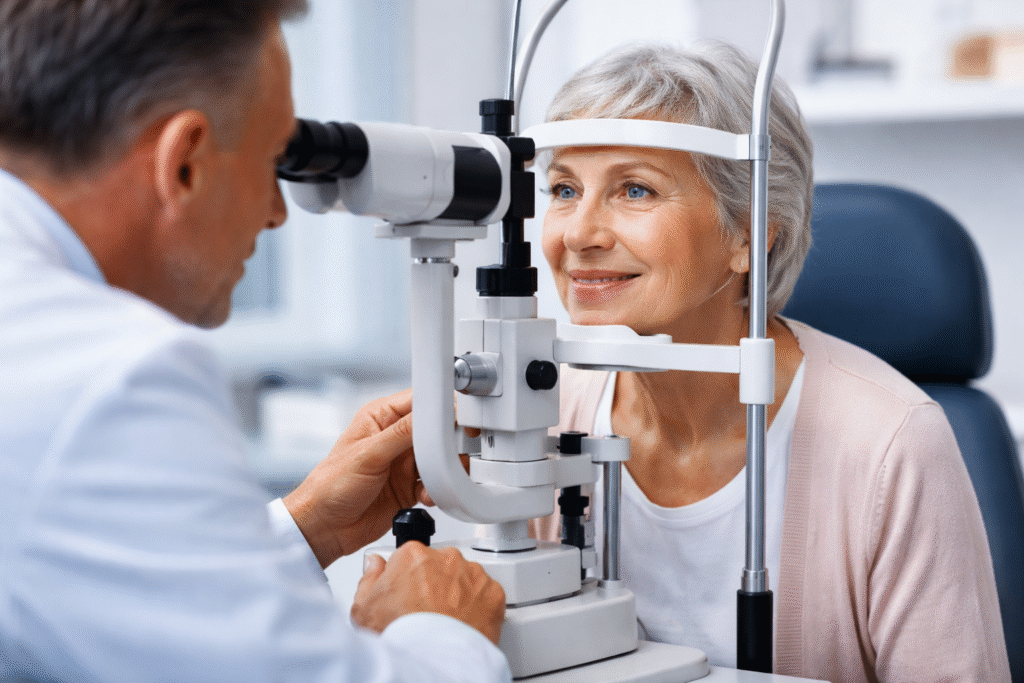
You will be seated at a slit lamp, which is a specialised piece of equipment that allows the surgeon to examine and treat the eye under magnification. A small contact lens may be placed on your eye to help focus the laser. Mr Manu Mathew will then direct the YAG laser at the cloudy capsule, creating a small opening. The procedure itself takes around 5 to 10 minutes. Most patients feel nothing during treatment.
After the procedure
You will remain at the clinic for a short time after the procedure so that eye pressure can be checked before you leave. The dilating drops will cause your vision to be blurred and sensitive to light for a few hours, so you will need to arrange for someone to drive you home. You should not drive on the day of your appointment.
Some patients notice small floaters in their vision in the days following treatment. These are fragments from the disrupted capsule and typically resolve without any intervention within a few weeks.
Recovery and Results
Recovery from YAG laser capsulotomy is straightforward. Most patients can return to normal activities the following day. There is no requirement to avoid reading, screens, or light exercise after the initial 24-hour period.
Your surgeon may prescribe a short course of anti-inflammatory eye drops to reduce the chance of any inflammation. A follow-up appointment is typically scheduled within a week or two to confirm that healing is progressing well and that intraocular pressure remains at a safe level.
Vision improvement is usually noticeable within hours to a day of the procedure, once the effects of the dilating drops have worn off. For many patients, the clarity they experience is comparable to the improvement they had after their original cataract surgery.
Can PCO Occur After Lens Replacement Surgery?
Yes. Posterior capsule opacification can develop following lens replacement surgery (also known as refractive lens exchange) for exactly the same reasons it occurs after cataract surgery. The lens capsule is preserved in both procedures to support the artificial lens, and cells can migrate across it over time in both cases.
The treatment is identical. YAG laser capsulotomy is just as effective following lens replacement surgery as it is after cataract surgery. If you have had lens replacement surgery and your vision has deteriorated, it is worth having your eyes examined to determine whether PCO could be the cause.
Will YAG Laser Treatment Need to Be Repeated?
In most cases, YAG laser capsulotomy is a one-time procedure. Once the opening has been created in the posterior capsule, the membrane cannot cloud over again in that location. The vast majority of patients experience a lasting improvement in vision following a single treatment session.
In rare cases, the initial opening may be insufficient and a second session may be required. Your surgeon will advise you if this is likely based on the extent of your PCO.
Why Patients Choose Eagle Eye Why Choose Eagle Eye Care for YAG Laser Treatment in Chesterfield?
Eagle Eye Care is led by Mr Manu Mathew, a consultant ophthalmologist with extensive experience in cataract surgery, lens replacement, and YAG laser treatment. Our clinic is based in Chesterfield, making specialist private eye care accessible to patients across Derbyshire and the surrounding region.
We offer short waiting times, a patient-centred approach, and clear, straightforward advice at every stage of your care. Whether you are experiencing symptoms of PCO for the first time or have already been told by another provider that you need YAG treatment, we would be happy to discuss your options with you.
To book a consultation or find out more, visit our YAG laser service page or contact the Eagle Eye Care team directly.
Frequently Asked Questions About PCO and YAG Laser Treatment
What is posterior capsule opacification?
Posterior capsule opacification (PCO) is a common condition that can develop months or years after cataract surgery. It occurs when the thin membrane behind your artificial lens becomes cloudy, causing blurred or hazy vision. It is not the cataract returning. It is a separate, treatable condition.
How do I know if I have PCO?
Common signs include blurred or hazy vision that gradually worsens, increased glare or halos around lights, difficulty reading or watching television, and colours appearing less vivid than they did after your initial surgery. If you have had cataract or lens replacement surgery and notice these changes, contact your eye specialist.
Is YAG laser treatment painful?
No. YAG laser capsulotomy is a painless outpatient procedure. Anaesthetic eye drops are applied beforehand so you will not feel anything during the treatment. Most patients describe the experience as quick and comfortable.
How long does YAG laser treatment take?
The procedure itself takes around 5 to 10 minutes. You will need to allow additional time for preparation, including the application of dilating eye drops, and a brief post-procedure check before you are discharged.
Can PCO occur after lens replacement surgery as well?
Yes. PCO can develop following lens replacement surgery for the same reasons it occurs after cataract surgery. The treatment is identical: a single YAG laser capsulotomy procedure to restore clear vision.
Will I need YAG laser treatment more than once?
In the vast majority of cases, YAG laser capsulotomy is a one-time treatment. Once the opening has been created in the posterior capsule, PCO cannot recur in the same area.
How quickly will my vision improve after YAG laser?
Most patients notice a significant improvement in vision within a few hours to 24 hours of the procedure, once the dilating eye drops have worn off. Some patients experience temporary floaters in the days following treatment, which typically resolve on their own.
Selecting the appropriate surgeon for your cataract surgery is crucial in guaranteeing a favorable result. You may choose a surgeon with the necessary expertise and resources to deliver optimal care for your eyesight by conducting thorough research on credentials, carefully analyzing specializations, reviewing technological advancements, obtaining recommendations, and relying on your intuition. Remember that the objective is to have a successful surgical procedure and a great overall experience that results in enhanced eyesight and tranquility.

Manu Mathew is a specialist in cornea and glaucoma surgery, with a special interest in oculoplastic surgery, strabismus and medical retina.