
Vision changes after 40 are common, but not all are simply due to ageing. This guide explains the key differences between cataracts and normal age-related vision changes, helping you understand symptoms, when to seek advice, and the most effective treatment options available.
April 3, 2026
Cataracts vs Ageing Vision: How to Tell the Difference

A consultant-led guide for anyone noticing changes to their sight after 40
“I keep thinking I need stronger glasses, but my optician says my prescription hasn’t changed much. Something just feels off.
This is one of the most common things patients say when they first come to see us.
It’s a completely valid concern. As your vision changes in your 40s, 50s or beyond, it’s not always obvious what’s causing it. Is it simply age-related vision change that glasses can correct, or could it be something more specific, like cataracts?
The two are related, and they can overlap. But they are not the same and understanding the difference matters, because the treatment options and outcomes are very different.
The Key Difference (Quick Answer)
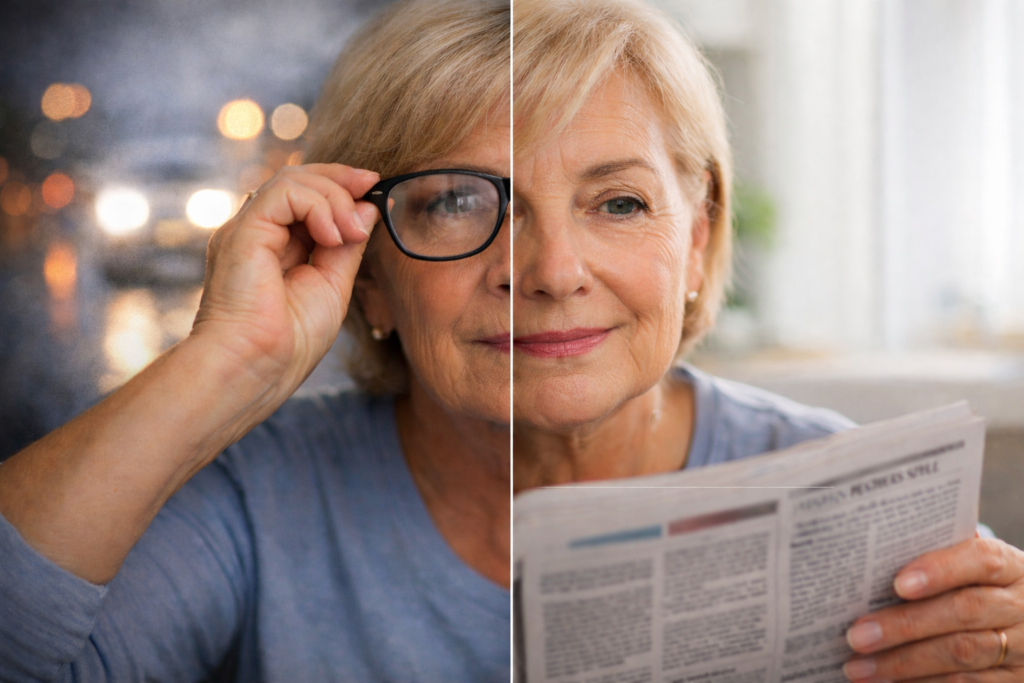
The main difference between cataracts and normal ageing vision is that ageing typically affects your ability to focus up close, while cataracts cause cloudy, blurred vision at all distances often with glare, halos, and faded colours.
What Happens to Vision as We Age?
From around the age of 40, most people begin to notice gradual changes in their vision.
The most common is presbyopia, a natural loss of near focus caused by the lens inside the eye becoming less flexible over time.
You may also notice:
- Reduced contrast sensitivity
- Needing brighter light to read
- Slightly reduced night vision
- Colours appearing a little less vivid These changes are:
- Gradual
- Predictable
- Usually well corrected with glasses
Importantly, they do not typically cause persistent cloudy or hazy vision.
What Is a Cataract?
A cataract is a clouding of the natural lens inside the eye.
In a healthy eye, this lens is completely clear, allowing light to pass through and form a sharp image. With age, the structure of the lens changes – proteins begin to break down and clump together, causing the lens to become cloudy or discoloured.
Patients often describe cataracts as:
- Looking through a misty or frosted window
- A yellow or dull tint to vision
- Increased glare from lights
- Halos around headlights at night
Cataracts are not painful or inflammatory but as they progress, they can significantly affect everyday activities like reading, driving, and recognising faces.
Cataracts vs Ageing Vision: Key Differences
Feature | Normal Ageing Vision | Cataracts |
Onset | Gradual from mid-40s | Usually from 50s-60s |
Main symptom | Difficulty focusing up close | Cloudy, hazy, or yellowed vision |
Do glasses help? | Yes, usually effective | Temporary improvement, then declines |
Glare & halos | Mild | Often significant |
Colour perception | Minimal change | Colours appear dull or yellowed |
One or both eyes | Usually both | Often worse in one eye initially |
Treatment | Glasses or lenses | Surgery required |
Key insight: If your glasses only help temporarily or your vision continues to worsen despite updates, this may suggest cataracts rather than normal ageing.
Symptoms of Cataracts vs Ageing Vision
Normal Age-Related Vision Changes
- Difficulty reading small print
- Needing brighter lighting
- Eye strain during close work
- Slower adjustment between distances
- Mild halos at night
- Gradual increase in reading prescription
Cataract Symptoms
- Persistent cloudy or blurred vision
- Colours appearing faded or yellowed
- Strong glare from lights
- Pronounced halos at night
- Frequent prescription changes
- Noticeably worse vision in one eye
While there is some overlap, only a clinical examination can confirm the cause.
When Should You See a Specialist?
Many people delay getting help, assuming their vision changes are just part of ageing. In reality, you should consider an assessment if:
- Your vision is affecting daily life
- Night driving is becoming difficult
- Glasses no longer provide clear vision
- One eye is noticeably worse Early assessment allows for:
- Accurate diagnosis
- Better treatment planning
- Improved long-term outcomes
Patients often tell us they wish they had come in sooner.
Treatment Options: What Are Your Choices?
For Age-Related Vision Changes
If your symptoms are due to presbyopia or refractive changes, options include:
- Glasses or contact lenses
- Laser vision correction (in suitable cases)
- Lens-based correction
A specialist consultation will help determine the best approach.
For Cataracts
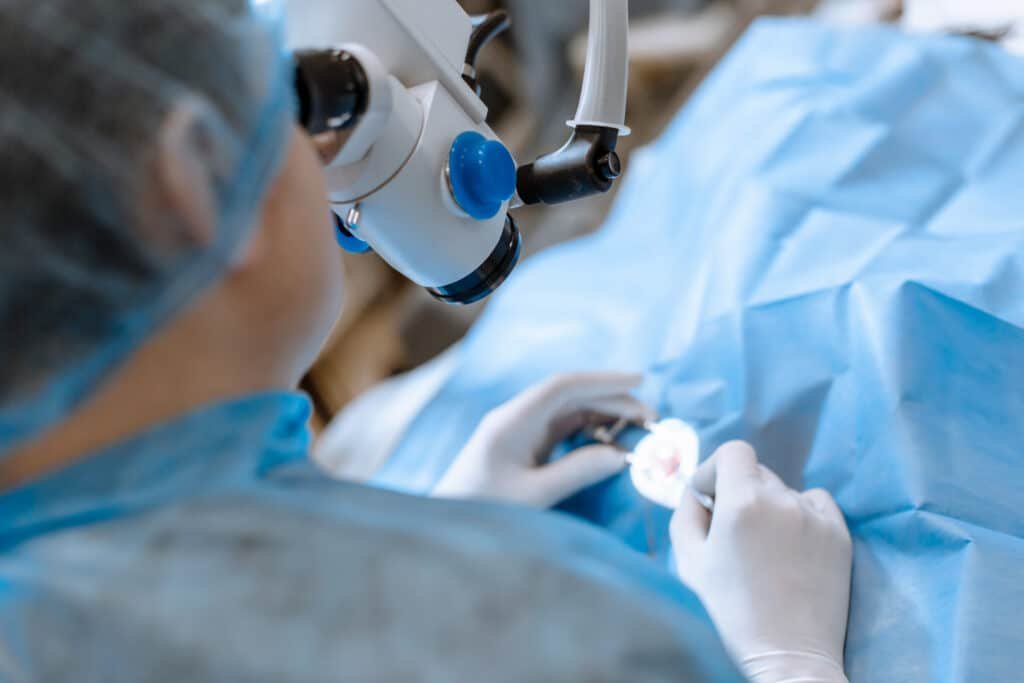
Cataract surgery is one of the most commonly performed and successful procedures in modern ophthalmology.
- Procedure time: 15-20 minutes per eye
- Performed under local anaesthetic
- Day-case (you go home the same day)
The cloudy lens is removed and replaced with a clear artificial lens (IOL).
Many patients are surprised by how straightforward the experience is and how dramatic the improvement in vision can feel.
Recovery After Cataract Surgery
Recovery is usually quick and uncomplicated:
- Noticeable improvement: within 24-48 hours
- Full stabilisation: 2-4 weeks You will be advised to:
- Use prescribed eye drops
- Avoid rubbing the eye
- Avoid water exposure initially
Most people return to normal activities within a few days.
Lens Options After Cataract Surgery
Different intraocular lenses (IOLs) offer different visual outcomes:
- Monofocal lenses – clear distance vision
- Extended depth of focus lenses – improved intermediate vision
- Multifocal lenses – reduced dependence on glasses
The right choice depends on your lifestyle, work, and visual expectations.
Why Patients Choose Eagle Eye Care
Choosing eye treatment can feel overwhelming. What patients consistently value is clear, honest advice and continuity of care.
At Eagle Eye Care:
- All assessments are consultant-led
- You see the same clinician throughout your journey
- Treatment plans are tailored to you
- There is no pressure or hard selling
We regularly see patients from Chesterfield, Derbyshire, Sheffield, Nottingham, and across the East Midlands who are looking for specialist-led private eye care.
The Bottom Line
Age-related vision changes and cataracts are both common but they are not the same. The key is understanding what is actually affecting your vision.
In most cases, there are clear and effective treatment options available. The earlier you understand your condition, the more control you have over your outcome.
Take the Next Step
If you are noticing changes in your vision and are unsure of the cause, a consultation can provide clarity.
There is no obligation, just a clear understanding of your eye health and the options available to you.
If you’re noticing changes in your vision and aren’t sure of the cause, getting expert advice early can help. It can prevent unnecessary worry and ensure you receive the right treatment at the right time.
At Eagle Eye Care, we provide consultant-led assessments to clearly distinguish between normal ageing changes and conditions such as cataracts. This allows us to recommend the most appropriate treatment for you.
Depending on your diagnosis, options may include advanced cataract surgery. We also offer lens replacement surgery for patients who want to address both cataracts and reduce their dependence on glasses.
In some cases, patients may develop cloudiness after surgery. A quick and effective YAG laser treatment can restore clear vision.
If you’d like to learn more, you can explore our FAQs. Or, if you prefer, you can contact us to arrange a consultation.
Our aim is to provide clear, honest advice. This helps you make confident decisions about your eye health.
Not sure whether your vision changes are due to cataracts or simply part of getting older? The only way to know for certain is a thorough eye examination. At Eagle Eye Care, our private eye test in Chesterfield is led personally by Mr Manu Mathew, consultant ophthalmologist, who can give you a clear, accurate diagnosis and the peace of mind you need. Book your consultation today.
Frequently Asked Questions About Cataracts and Cataract Surgery
How do I know if I have cataracts or ageing vision?
Ageing typically affects near focus, while cataracts cause cloudy vision, glare, and colour changes. A clinical assessment is required for confirmation.
At what age do cataracts develop?
Most commonly from the mid-50s onwards, though symptoms may appear later.
Can cataracts be treated without surgery?
No. Surgery is the only treatment, though early cataracts can be monitored.
Is cataract surgery safe?
Yes. It is widely performed with a strong safety profile.
Will I still need glasses after surgery?
This depends on the lens chosen. Some patients still need glasses, while others significantly reduce dependence.
How long does cataract surgery take?
Typically 15-25 minutes per eye.
Is the procedure painful?
No. It is performed under local anaesthetic and is generally very well tolerated.
What is presbyopia and is it the same as a cataract?
Presbyopia is a natural, age-related loss of near focus that typically begins in the mid-40s. It occurs because the lens inside the eye gradually loses flexibility, making it harder to focus on close objects. It is not a cataract. Presbyopia affects near focus and is usually correctable with glasses, while cataracts cause cloudy or hazy vision at all distances and cannot be corrected with glasses alone.
Why do my glasses keep needing updating?
Frequent changes to your glasses prescription can be a sign of cataracts. As the lens inside the eye continues to cloud, the way it bends light changes, which can cause your prescription to shift. If you have needed multiple updates in a short period of time and your vision is still not clear, it is worth having a specialist assessment to determine whether cataracts could be the cause.
Can cataracts affect one eye more than the other?
Yes. Although cataracts often develop in both eyes, they do not always progress at the same rate. One eye may be noticeably more affected than the other, which can sometimes make the difference in vision between eyes feel quite pronounced. During a clinical assessment, both eyes will be examined separately to assess the extent of any changes.
When should I see a specialist about my vision?
You should consider booking an assessment if your vision is affecting your daily activities, if night driving has become difficult, if glasses no longer provide adequate correction, or if you notice persistent cloudy or hazy vision. Many people delay seeking advice, assuming their symptoms are simply part of getting older. Early assessment allows for an accurate diagnosis and better planning of any treatment that may be needed.
Can age-related vision changes be treated without surgery?
For presbyopia and other refractive changes, glasses, contact lenses, or lens-based correction can often restore good vision without the need for surgery. Laser vision correction may also be appropriate in some cases. Cataracts, however, cannot be reversed with any non-surgical method, and surgery is the only effective treatment once a cataract is affecting your quality of life.
What IOL options are available after cataract surgery?
There are several types of intraocular lens to choose from, depending on your lifestyle and visual goals. Monofocal lenses provide clear distance vision, though reading glasses may still be needed for close work. Extended depth of focus lenses improve intermediate and distance vision. Multifocal lenses are designed to reduce overall dependence on glasses at multiple distances. Mr Manu Mathew will discuss which option is most appropriate for you during your consultation.
What is recovery from cataract surgery like?
Recovery is usually quick and straightforward. Most patients notice a meaningful improvement in vision within 24 to 48 hours of surgery. You will be prescribed eye drops to prevent infection and inflammation, and advised to avoid rubbing the eye and water exposure in the early stages. Most people return to normal daily activities within a few days, with full stabilisation typically taking two to four weeks.
Selecting the appropriate surgeon for your cataract surgery is crucial in guaranteeing a favorable result. You may choose a surgeon with the necessary expertise and resources to deliver optimal care for your eyesight by conducting thorough research on credentials, carefully analyzing specializations, reviewing technological advancements, obtaining recommendations, and relying on your intuition. Remember that the objective is to have a successful surgical procedure and a great overall experience that results in enhanced eyesight and tranquility.
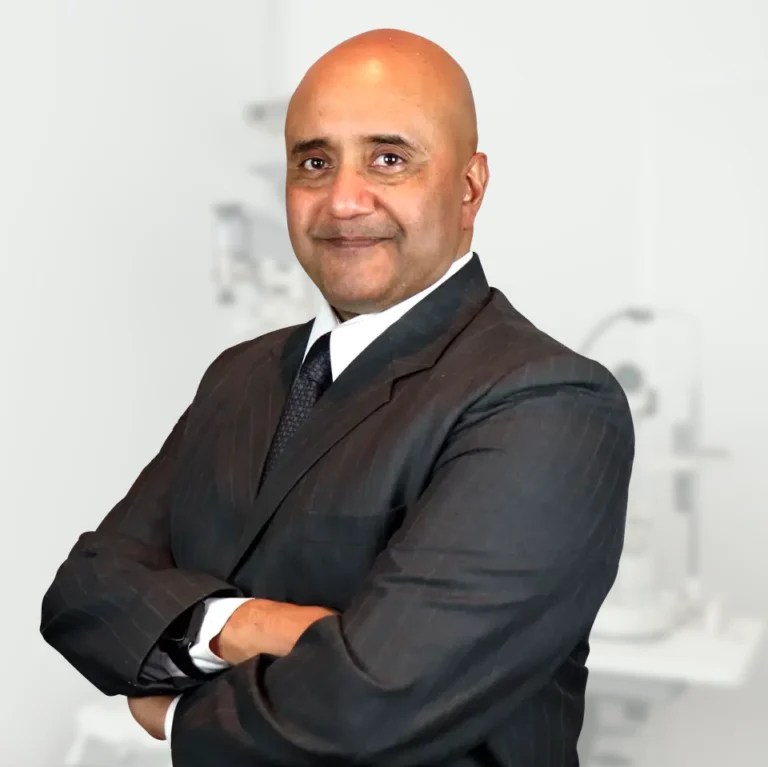
Manu Mathew is a specialist in cornea and glaucoma surgery, with a special interest in oculoplastic surgery, strabismus and medical retina.