
Driving after eye surgery is one of the most common questions patients ask before their procedure. This guide covers the legal requirements, recovery timelines, and practical advice for patients having cataract surgery, lens replacement, or YAG laser treatment at Eagle Eye Care in Chesterfield.


Knowing when you can drive again is one of the first things patients ask. Whether you are preparing for cataract surgery, lens replacement surgery, or YAG laser treatment, the answer depends on your recovery and your vision. This guide explains what you need to know at every stage.
Why You Cannot Drive Immediately After Eye Surgery
Eye surgery temporarily affects how clearly you can see. Dilating drops, anaesthetic, and the healing process all alter your vision in the short term. Therefore, driving on the day of your procedure is not safe and is not permitted. You must also meet the DVLA’s minimum eyesight standard before you return to the road. For most drivers, this means reading a number plate at 20 metres in good daylight. Mr Manu Mathew will confirm when you meet this standard at your follow-up appointment.The Day of Surgery
On the day of your procedure, you will need someone to drive you home. This applies to all three treatments we offer at Eagle Eye Care. Dilating drops are used before surgery to open the pupil. These cause blurred vision and light sensitivity for several hours. Additionally, any mild sedation used during the procedure affects your ability to drive safely. Plan your transport well in advance. Arrange for a family member or friend to collect you, or book a taxi before your appointment day.Driving After Cataract Surgery
Most patients notice a significant improvement in vision within 24 to 48 hours of cataract surgery. However, an improvement in vision does not automatically mean you can drive.When Can You Drive Again?
You can return to driving when your vision meets the DVLA’s minimum standard, your surgeon has confirmed it is safe, and you feel confident behind the wheel. For most patients, this happens within one to two weeks of surgery. However, timelines vary between individuals. Your follow-up appointment is the right time to ask Mr Manu Mathew whether your vision is ready. Do not make assumptions based on how things feel subjectively.If Both Eyes Need Surgery
Eagle Eye Care performs surgery on each eye on separate days. You may therefore have functional vision in one eye while the second eye heals. Nevertheless, always wait for your surgeon’s clearance before driving.Driving After Lens Replacement Surgery
Recovery after lens replacement surgery follows a similar pattern to cataract surgery. Most patients experience a rapid improvement in vision within the first few days.Adjusting to Your New Lens
Depending on the type of intraocular lens chosen, your brain may need time to adapt. Multifocal lenses, in particular, can cause temporary halos or glare around lights in the early weeks. This can affect confidence when driving at night. Therefore, daytime driving is usually more appropriate initially. Discuss any visual disturbances with Mr Manu Mathew at your follow-up. He will advise you on when night driving is appropriate to resume.Driving After YAG Laser Treatment
YAG laser capsulotomy is a shorter, less invasive procedure than cataract or lens replacement surgery. However, you still cannot drive on the day of treatment.Why You Cannot Drive on the Day
Dilating drops are applied before the procedure to open the pupil. These cause blurred vision and light sensitivity for several hours. As a result, you must arrange transport home before your appointment.Returning to Driving After YAG Laser
Most patients can drive again the following day, once the dilating drops have fully worn off. Your vision should return to normal relatively quickly after YAG laser treatment. However, wait until you are confident your sight meets the legal standard before getting behind the wheel.Legal Requirements for Driving After Eye Surgery
The DVLA sets minimum eyesight standards for all UK drivers. You must read a number plate at 20 metres in good daylight. You must also have a visual field that meets the required standard for your licence category. If cataracts currently affect your vision, you have a legal responsibility to consider whether it is safe to drive. Furthermore, if your vision deteriorates between appointments, you must inform the DVLA. Our frequently asked questions page covers more on eye health and everyday life after surgery.Practical Tips for the Day of Your Procedure
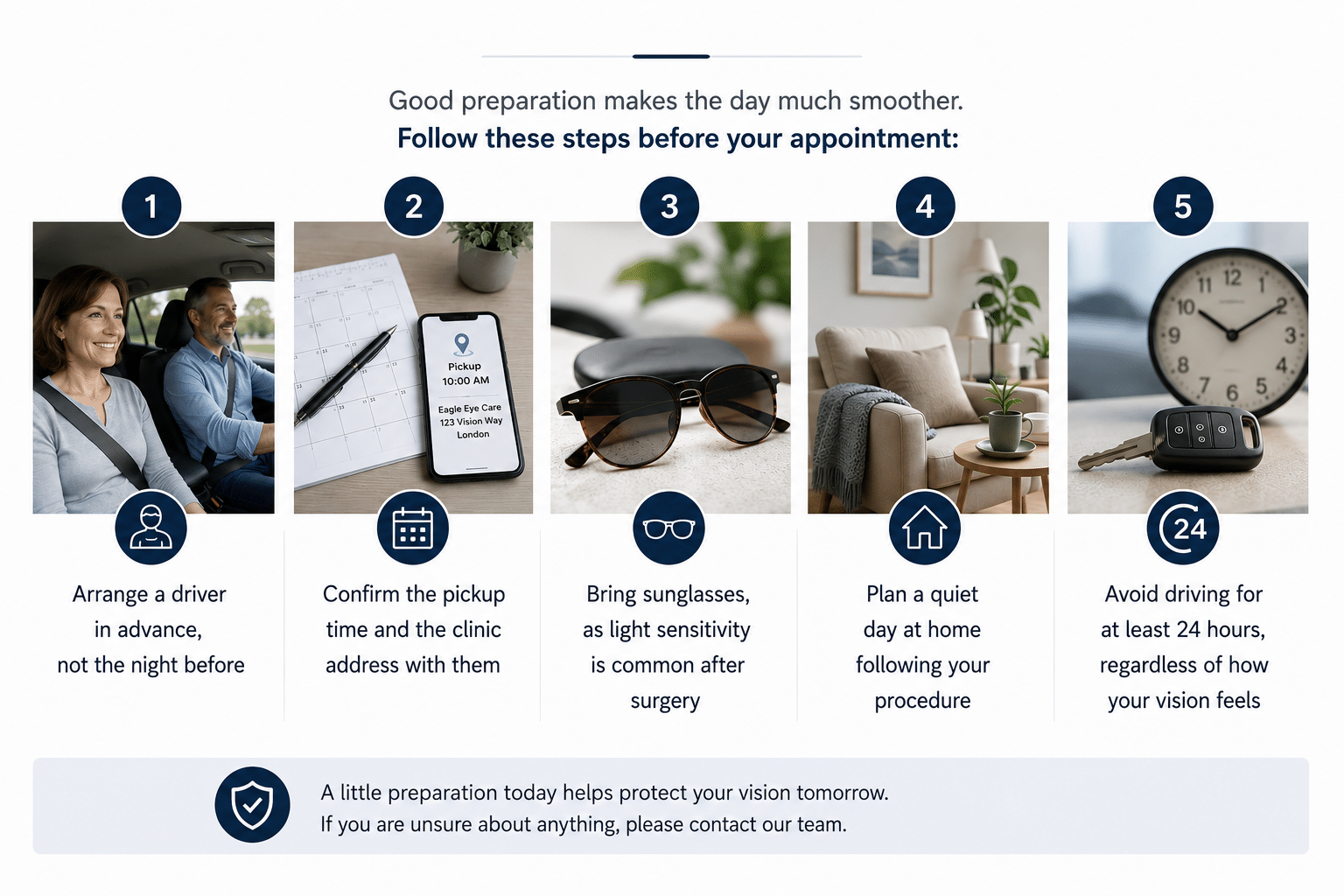
Good preparation makes the day much smoother. Follow these steps before your appointment:
- Arrange a driver in advance, not the night before
- Confirm the pickup time and the clinic address with them
- Bring sunglasses, as light sensitivity is common after surgery
- Plan a quiet day at home following your procedure
- Avoid driving for at least 24 hours, regardless of how your vision feels
When to Contact Eagle Eye Care
Contact us promptly if you notice any of the following after surgery: sudden worsening of vision, significant pain or discomfort, increased redness or swelling, or new floaters and flashes of light. Do not drive if you have concerns about your vision. Contact Eagle Eye Care to arrange an earlier follow-up appointment with Mr Manu Mathew.The Bottom Line
Driving after eye surgery requires patience. Your vision will improve, and you will return to the road. However, safety must always come first. Wait for your surgeon’s clearance, meet the DVLA’s legal standard, and feel confident before you drive again. To find out more about your procedure and recovery, visit our cataract surgery, lens replacement, or YAG laser pages, or get in touch with our team to book a consultation.If you have noticed any changes in your vision, the first step is a thorough eye examination. At Eagle Eye Care, our private eye test in Chesterfield is led personally by Mr Manu Mathew, consultant ophthalmologist. Book your consultation today.
Frequently Asked Questions About Driving After Eye Surgery
Can I drive the day after cataract surgery?
Most patients cannot drive the day after cataract surgery. You must wait until your vision meets the DVLA’s minimum standard and your surgeon confirms it is safe. For most patients, this takes one to two weeks.Do I need to inform the DVLA about my cataract surgery?
You do not need to notify the DVLA specifically about cataract surgery. However, if your cataracts currently affect your vision to a degree that could impact driving safety, you have a responsibility to consider this carefully. Speak to your surgeon if you are unsure.Can I drive after YAG laser treatment?
You cannot drive on the day of YAG laser treatment due to the dilating drops used beforehand. Most patients can return to driving the following day, once the drops have worn off and their vision feels normal.How do I know if my vision meets the driving standard after surgery?
Your surgeon will assess your vision at your follow-up appointment. The legal standard requires you to read a number plate at 20 metres in good daylight. Do not drive until your surgeon confirms your vision is sufficient.What if I have no one to drive me home after my procedure?
If you do not have someone available, arrange a taxi or private hire vehicle in advance. Do not drive yourself under any circumstances on the day of your procedure. Contact Eagle Eye Care if you need further guidance when planning your appointment.Can I drive with one eye patched after surgery?
No. Driving with a patch covering one eye significantly reduces depth perception and is not safe. Wait until both eyes are uncovered and your vision meets the legal standard before you drive.