Please share a few details and our team will be in touch to arrange your consultation or call you back at a convenient time.
Concerned about changes in your vision or simply want reassurance about your eye health? Our comprehensive eye examinations are carried out personally by Consultant Ophthalmologist Mr Manu Mathew, combining specialist expertise with advanced diagnostic technology to assess your vision, detect eye conditions early, and provide clear, personalised advice on the most appropriate next steps. Book your consultant-led eye examination today and take the first step towards protecting your vision with confidence.
Thinking about treatment? Download your free information pack today.
Review the treatment process & acknowledge informed consent forms.
Fill out the insurance information form before your appointment.
Prepare for your appointment with our pre-appointment checklist.
Know the key steps for a smooth recovery after Surgery.
Our aim is to help you understand your eye health and treatment options, allowing you to make informed decisions with confidence
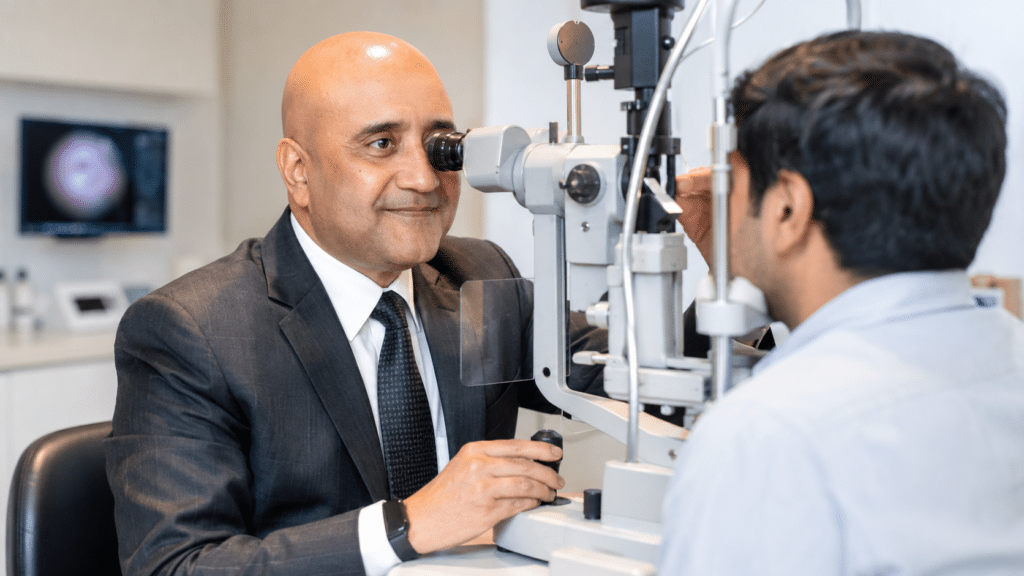
High street opticians provide a valuable service. However, their appointments are typically short and their equipment is focused on prescription testing. A consultant ophthalmologist leads your examination at Eagle Eye Care, giving you a higher level of clinical expertise at every stage.
Mr Manu Mathew has specialist training in cornea, glaucoma, and medical retina. As a result, he is able to identify conditions that fall outside the scope of a standard optician appointment. Should you need further investigation or treatment, we can arrange it within the same practice.
Our aim is to provide a clear diagnosis, explain your findings in straightforward language, and help you make informed decisions about your eye health.
Who Should Book a Private Eye Test?
A private eye test at Eagle Eye Care suits anyone who wants a thorough examination. We particularly recommend it if:
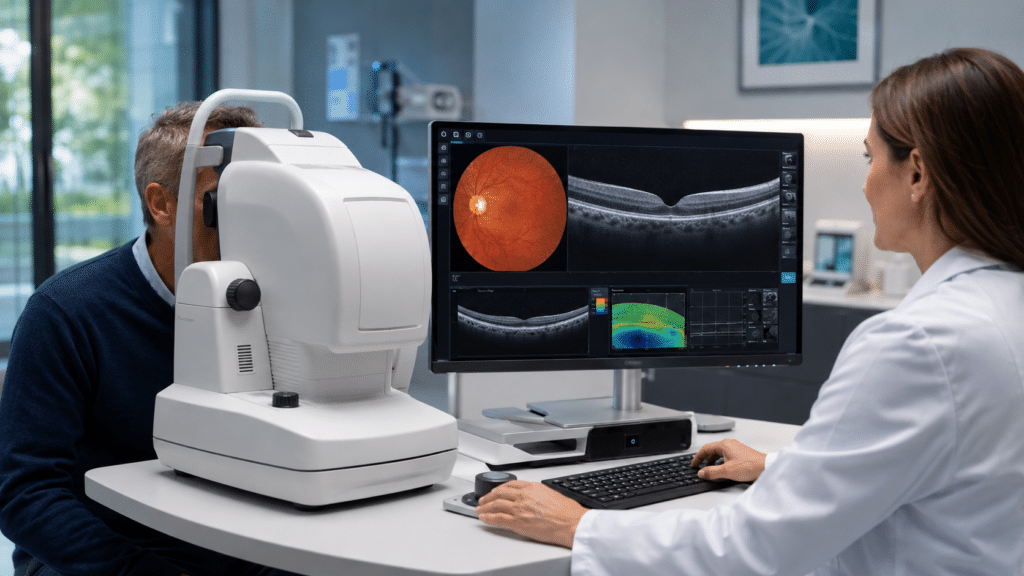
Our private eye test goes well beyond a standard vision check. We tailor each examination to your individual history and concerns.
Visual Acuity Assessment
We measure how clearly you can see at different distances. This identifies any refractive errors such as short-sightedness, long-sightedness, or astigmatism.
Slit Lamp Examination
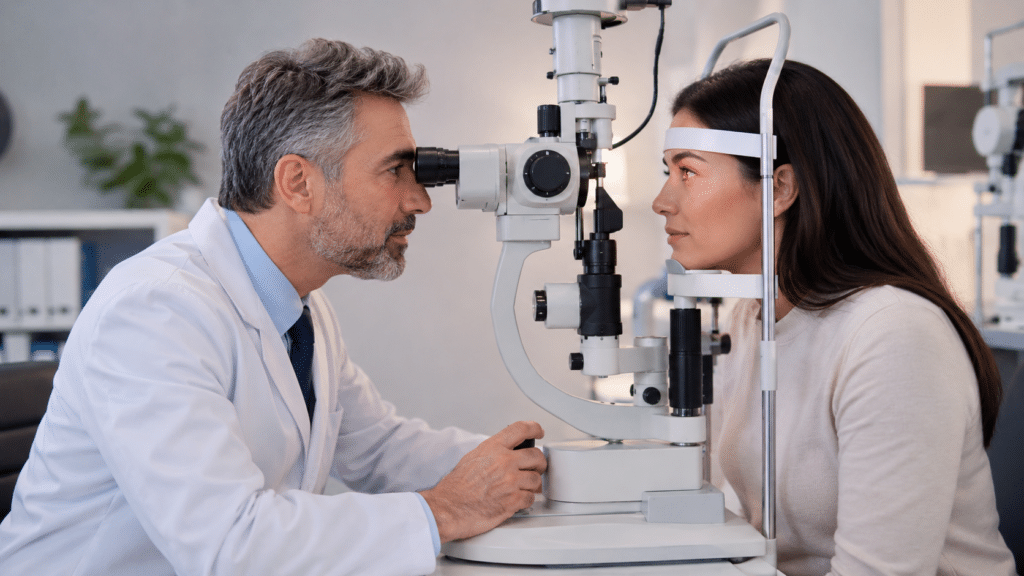
A slit lamp examination allows Mr Manu Mathew to inspect the front structures of the eye in detail, including the cornea, iris, and lens. This can detect early signs of cataracts, corneal disease, and other conditions.
Intraocular Pressure Testing
Raised intraocular pressure is a key risk factor for glaucoma, so we measure eye pressure as part of every examination. As a result, early detection significantly improves the outcome of treatment.
Dilated Fundus Examination
Where clinically appropriate, we dilate the pupils to examine the back of the eye. This allows a detailed view of the retina, optic nerve, and blood vessels, and is essential for detecting conditions such as macular degeneration, diabetic retinopathy, and retinal detachment.
Visual Field Testing
Visual field testing maps your peripheral vision, helping detect conditions that affect the edges of your sight before you notice them yourself. Glaucoma, in particular, tends to affect peripheral vision first.
OCT Scan (where indicated)
Optical coherence tomography produces a detailed cross-sectional image of the retina. It detects structural changes in the eye at a microscopic level. Therefore, it is one of the most powerful diagnostic tools available in private eye care.
What Can an Eye Test Detect?
An eye test is not just about updating your glasses prescription. In fact, a thorough examination can identify a wide range of conditions, many of which show no obvious symptoms in their early stages.
Eye Conditions
General Health Conditions
The eyes provide a unique window into your overall health. During an examination, for example, Mr Manu Mathew can sometimes identify signs of the following conditions:
If Mr Manu Mathew identifies any general health concerns during your examination, he will advise you to follow up with your GP.
Together, these assessments provide a comprehensive understanding of your vision and eye health, enabling early diagnosis, accurate treatment planning, and personalised advice tailored to your individual needs.
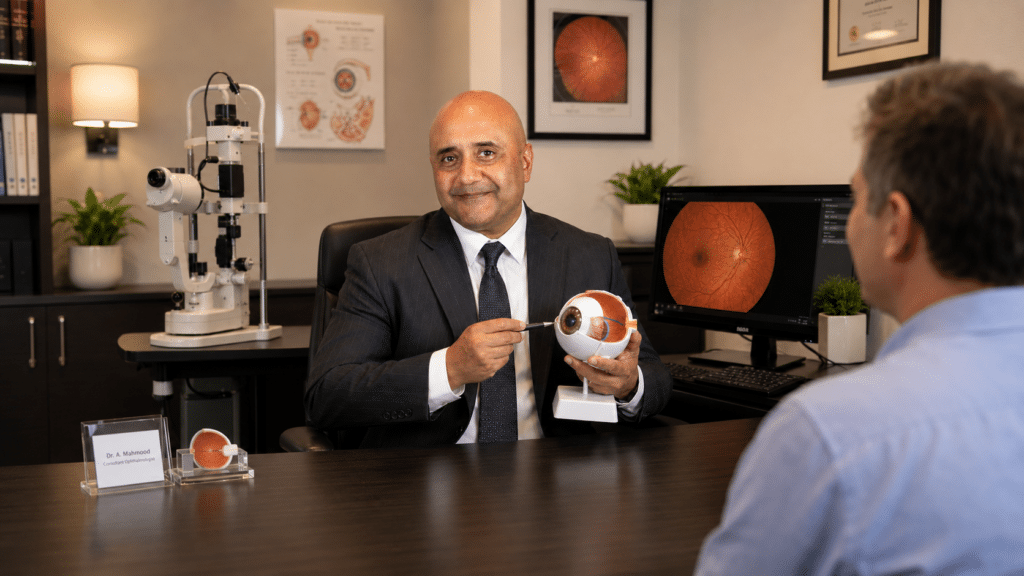
Before Your Appointment
Make a note of any symptoms you have noticed, however minor. Bring your current glasses or contact lenses with you. If you wear contact lenses, we may need you to remove them before certain tests. Existing eye records or letters from your GP are also helpful, so bring these along if you have them — they help Mr Manu Mathew build a complete picture of your eye health history.
During Your Appointment
Your appointment begins with a discussion of your symptoms, medical history, and any concerns you have, followed by the clinical examination itself. If we need to dilate your pupils, please allow extra time for your appointment. Dilation causes temporary blurring and light sensitivity. Therefore, we recommend arranging a lift home if this applies to you.
After Your Appointment
Mr Manu Mathew will explain his findings clearly and in plain language. Should any concerns arise, he will discuss the options with you directly. There is no referral to a third party. Should you need treatment or further investigation, we can arrange it at Eagle Eye Care.
You will leave your appointment with a clear understanding of your eye health, your diagnosis if applicable, and the recommended next steps, allowing you to make informed decisions with confidence.
If We Find a Condition, We Can Help
Because Eagle Eye Care offers a full range of specialist services, we can assess and treat any condition identified during your eye test within the same practice.
Cataract Surgery
If we find cataracts, cataract surgery at Eagle Eye Care is a well-established, day-case procedure that restores clear vision and significantly improves quality of life.
Lens Replacement Surgery
If we identify presbyopia or a high refractive error, we may discuss lens replacement surgery as a long-term solution that reduces or eliminates dependence on glasses for most patients.
YAG Laser Treatment
If you have previously had cataract surgery and are experiencing cloudy vision, YAG laser treatment is a quick, effective procedure that we carry out at our Chesterfield clinic.
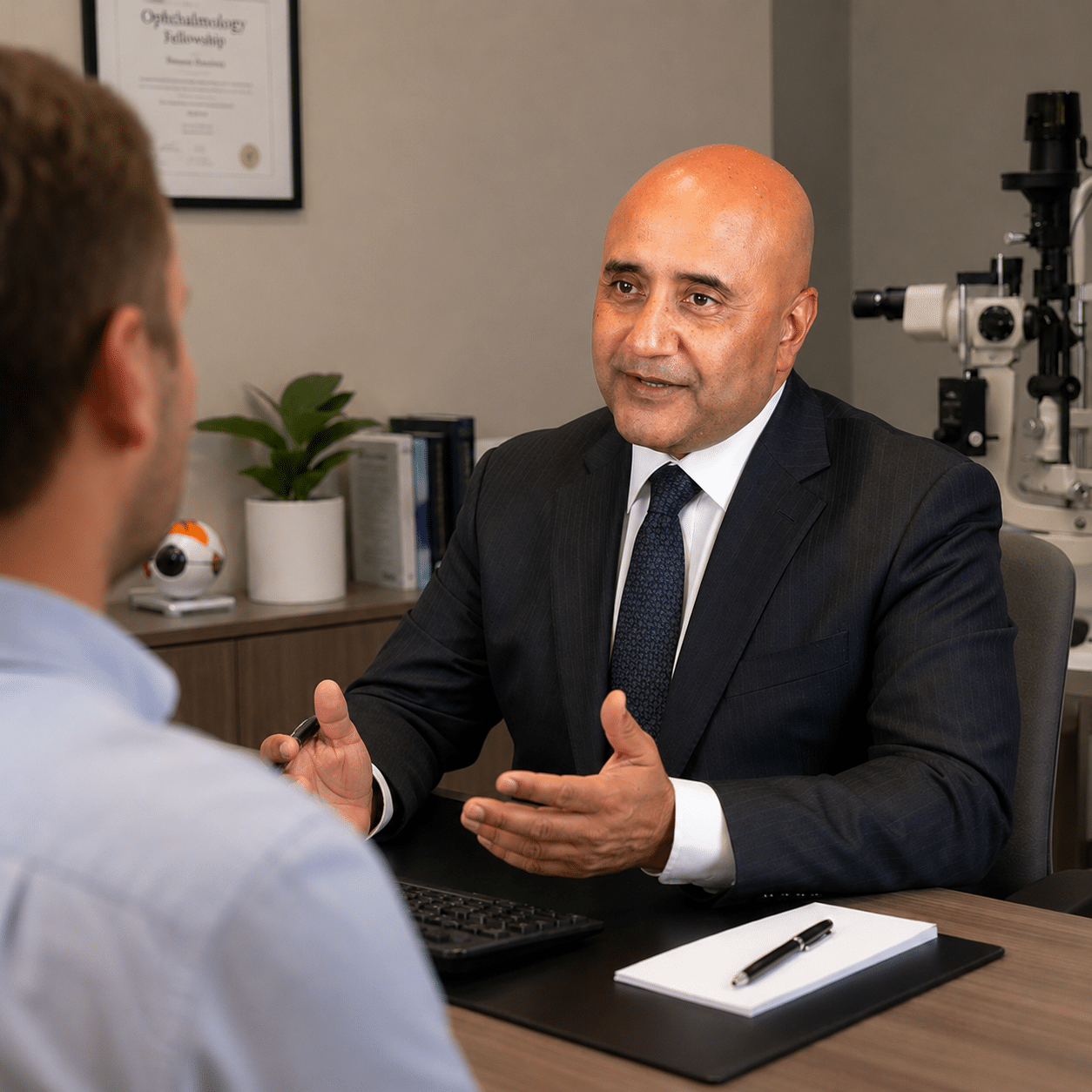
This begins with a discussion of your symptoms, vision history, and any concerns. It helps direct the examination towards what matters most for your eye health.
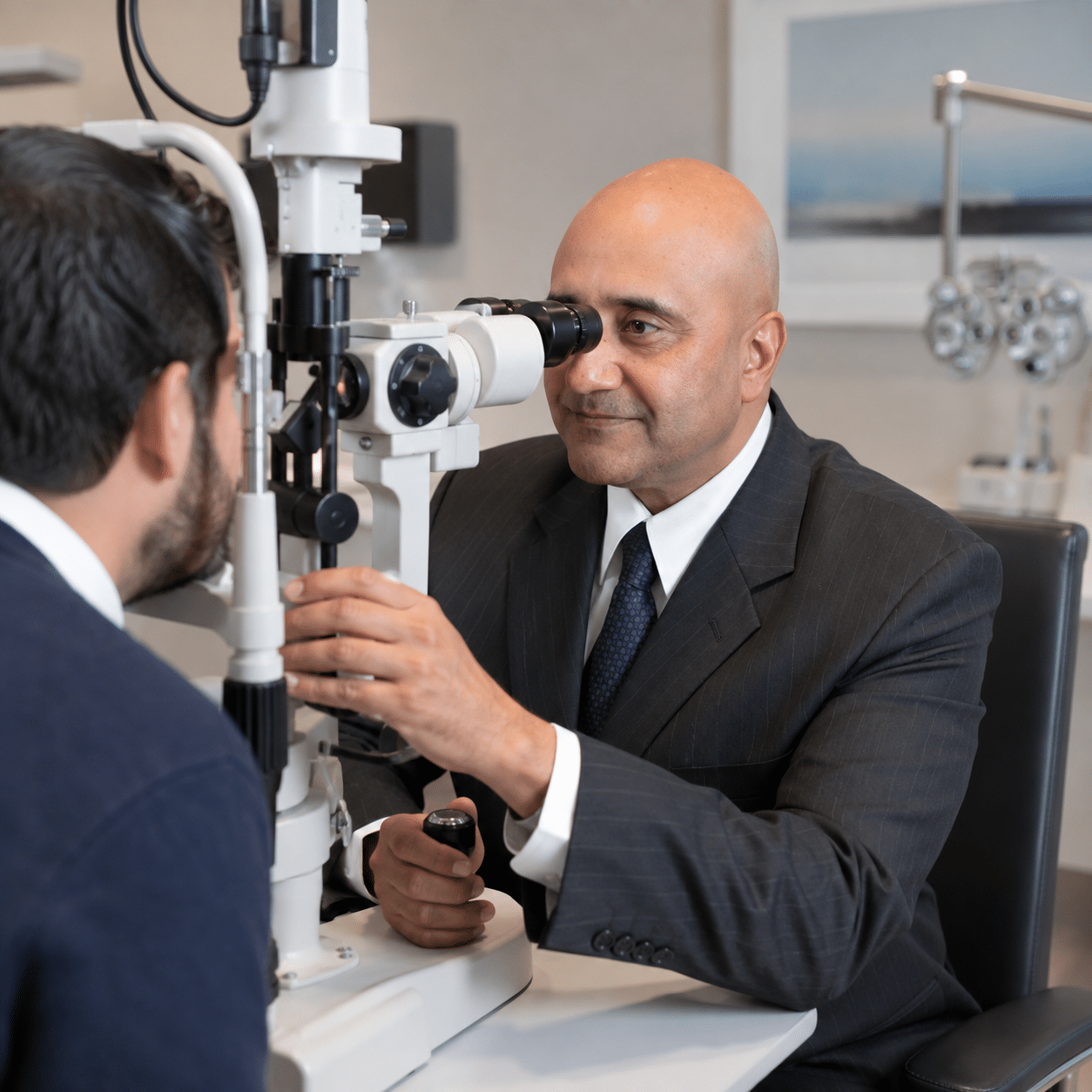
We test your distance and near vision to establish a baseline and check for refractive errors, and we also measure intraocular pressure using a non-contact method - a key indicator of glaucoma risk.
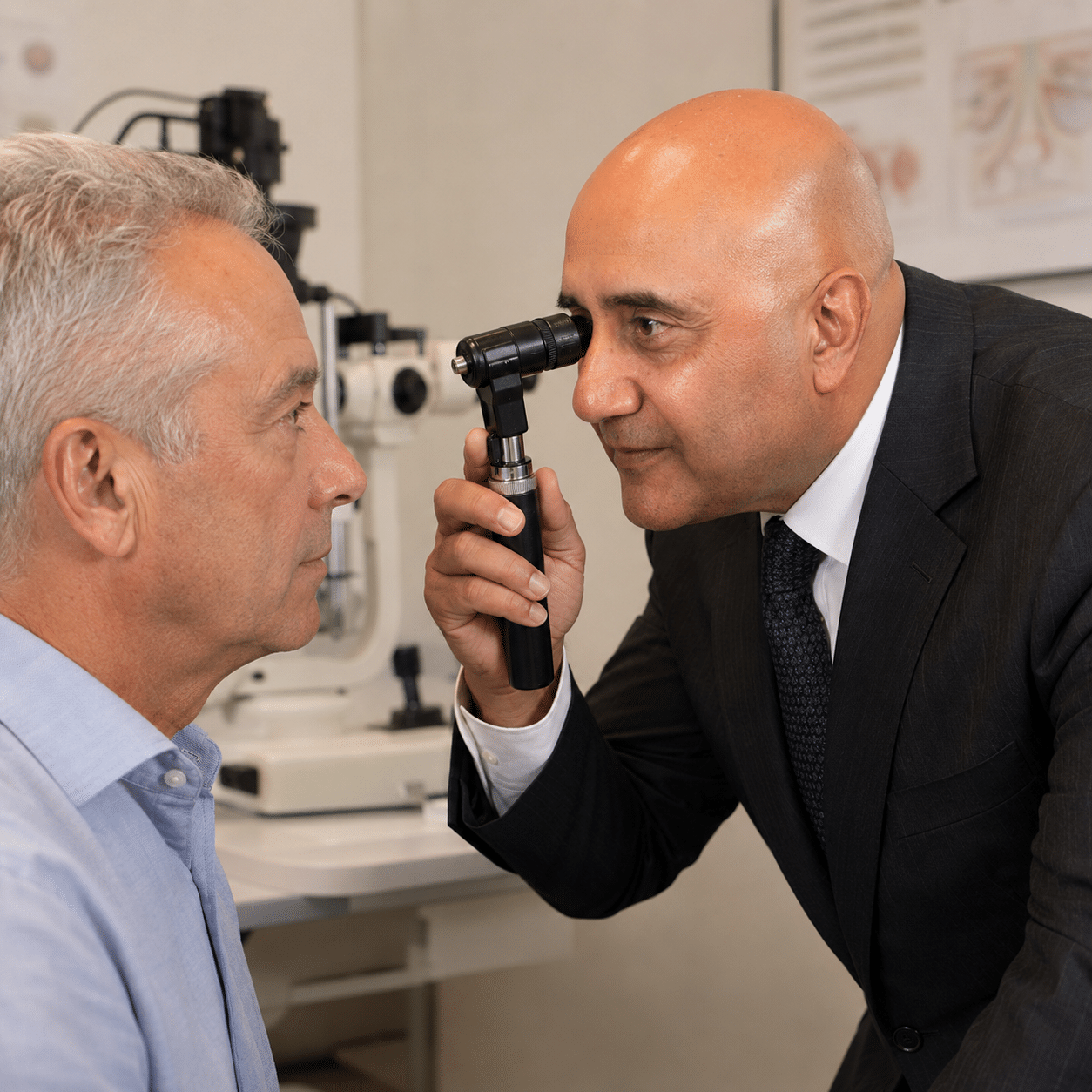
We examine the cornea, iris, and lens for signs of cataracts or corneal disease, and dilate the pupils where appropriate for a closer look at the retina, optic nerve, and blood vessels.
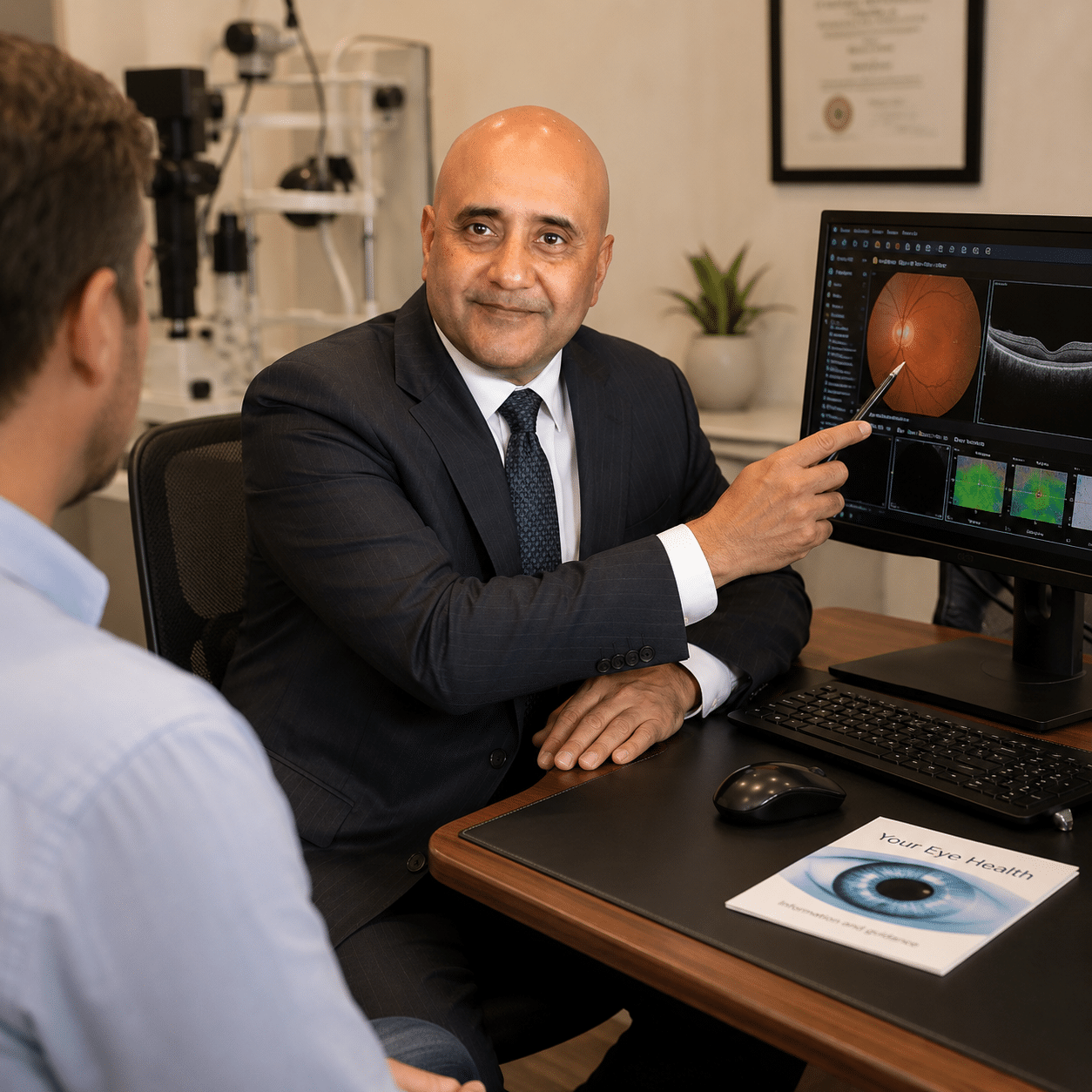
We will explain your findings clearly. If you need treatment or further investigation, he will outline the options and next steps before you leave.
From your initial consultation through to discussing your results, our aim is to provide a thorough assessment, clear explanations, and personalised advice to help you make informed decisions about your eye health.
A private eye test at Eagle Eye Care is led by a consultant ophthalmologist rather than a dispensing optician. The appointment is longer, more detailed, and uses advanced diagnostic equipment. Additionally, if a condition is found, treatment can be arranged within the same practice without a referral or waiting list.
Most adults should have a full eye examination every two years. However, you should book sooner if you notice any change in your vision. People with diabetes, glaucoma risk, or a family history of eye disease may need more frequent checks. Mr Manu Mathew will advise on the right schedule for you.
No. You can book directly without a GP referral. Simply contact us and our team will arrange your appointment at a time that suits you.
Not necessarily. Dilation is used when a detailed examination of the retina is required. Mr Manu Mathew will advise whether this is appropriate for your appointment. If your pupils are dilated, your vision may be blurred for a few hours afterwards. Therefore, we recommend arranging a lift home.
Yes. Glaucoma is one of the most important conditions we check for during a full eye examination. Raised intraocular pressure, optic nerve changes, and visual field loss are all assessed. Early detection is crucial because glaucoma causes permanent damage if left untreated.
Please bring your current glasses or contact lenses. If you have any previous eye test results, hospital letters, or GP correspondence, bring these along too. They help Mr Manu Mathew understand your eye health history.
Please contact us to discuss your child’s needs. Mr Manu Mathew will advise on the most appropriate examination based on your child’s age and symptoms.
If a condition is identified, Mr Manu Mathew will explain the findings clearly. He will outline the treatment options and recommended next steps. Because Eagle Eye Care offers a full range of specialist services, you will not need to be referred elsewhere for conditions including cataracts, lens replacement, or YAG laser treatment.
You can book by visiting our contact page or by calling the clinic directly. Our team will confirm your appointment and send you everything you need to prepare.
Most appointments take 45 to 60 minutes, depending on your symptoms and whether any additional investigations are required. If your pupils need to be dilated for a more detailed retinal examination, your visit may take a little longer.
Yes. In most cases, Mr Manu Mathew will discuss your examination findings during your appointment. If further investigations or treatment are recommended, your options and next steps will be explained clearly before you leave.
In most cases, yes. However, if your pupils are dilated, your vision may be temporarily blurred and you may be more sensitive to light for a few hours. In these circumstances, we recommend arranging alternative transport home.
If your examination is normal, Mr Manu Mathew will explain the findings, answer any questions you may have, and advise when you should have your next eye examination. Many patients find real reassurance in confirming that their eyes are healthy.
Please update your information to book a consultation or arrange a call back. Providing complete details will help us assist you better.